Home/ Blog/Discover advanced methods to bypass Cloudflare check successfully

Discover advanced methods to bypass Cloudflare check successfully

logo Hidemyacc circle

In an age where online security is foremost, Cloudflare stands as a robust guardian against unwanted bots and cyber threats. But what if you need to access data or automate tasks?

This comprehensive tutorial unveils the strategies and methods for bypassing Cloudflare's defenses. Whether you're a web scraping pro, automation enthusiast, or simply intrigued by the tech, let’s dive into this blog post to conquer Cloudflare's security and empower your online endeavors.

Understanding Cloudflare bot protection

Before going through effective ways to bypass Cloudflare, let's start by getting to know Cloudflare a bit.

  • Cloudflare Bot Protection, offered by a well-known web security company, is a part of Cloudflare's Security Operations Center (SOC)-as-a-Service. This solution is suitable for various types of businesses and provides services such as comprehensive security monitoring, incident response, and threat detection.
  • The Bot Management module is designed to manage the bots that can get through CAPTCHAs and cause problems such as credit card stuffing, credential stuffing, inventory hoarding, application DDoS, content spam, and more. The tool still allows certain types of bots to operate such as Google's bots, chatbots, personal assistant bots, and web crawling bots.
  • The Bot Management feature can be a real headache for professionals and businesses who rely on large-scale web scraping for their work. Web pages protected by Cloudflare will deny access to bots. Even with repeated attempts, you'll encounter error messages like "Error 1012: Denied access" or "Error 1015: You're being rate-limited."

If you're facing this issue, you'll need to learn about effective bot protection mitigation practices. To do that, it's crucial to understand the methods Cloudflare uses to identify bots, as this knowledge will help you bypass Cloudflare more efficiently.

Cloudflare
Cloudflare

Bot detection with Cloudflare

Cyber bots are everywhere, and Cloudflare has a strategy for dealing with them. They use two key approaches: active and passive bot detection. In the following sections, we'll delve into these techniques, providing insights and examples for each.

Passive bot detection methodologies

Passive Bot Detection Methods" are like hidden cameras, quietly observing automated bots without bothering them or kicking them out.

Botnet detection based on IP address and its fraud score

Using a “poor” IP address can’t let you bypass Cloudflare. Why?

Cloudflare employs advanced behavioral analysis to keep an eye on bot networks. It observes how these botnets operate and keeps a record of the IP addresses and devices that exhibit harmful bot-like behavior. When a request comes from one of these flagged IP addresses or devices, Cloudflare automatically blocks it.

Every IP address is assigned a fraud or risk score, which serves as an indicator of the reputation of that particular IP address. This score will be based on the historical reputation of the internet service provider (ISP) associated with the IP address, the geographical location of the IP address, and the source of the IP address itself.

Cloudflare will review this fraud score and if the IP address is linked to a sketchy ISP, is located in a suspicious location, or has a questionable source, Cloudflare will limit what the bots using that IP address can do.

Checking the HTTP request headers

Cloudflare analyzes the HTTP request header to distinguish bots from real users. If the request doesn't originate from a typical web browser or lacks required headers, it's flagged as a bot and gets blocked.

Use of TLS fingerprinting

Cloudflare uses TLS Fingerprinting to detect the user agent because fingerprints vary between devices and software and when a device connects using TLS, it sends a "client hello" message with encryption details. Cloudflare checks this message and the "user-agent" header. If they match known fingerprints, the request is allowed; otherwise, it might be blocked.

HTTP/2 fingerprinting technique

Just like TLS, HTTP/2 headers are vital for identifying bots. HTTP/2 is widely used and enhances web security. It compresses header fields, allowing multiple requests over one connection. HTTP/2 fingerprinting uses binary framing to create unique fingerprints for each request. Cloudflare uses this to verify requests. It also matches HTTP/2 fingerprints to a whitelist, much like TLS fingerprinting. If there's a match, the request goes through.

Active Bot Protection Methodologies

Active bot detection means checking on the visitor's side to see if it's a robot and blocking it. Here, we'll share some popular methods that Cloudflare uses for active bot detection.

CAPTCHA usage

CAPTCHAs are a common way to block bots. They're often placed before login to challenge bots since certain patterns and images require human intelligence to understand. Cloudflare uses CAPTCHAs to detect bots, but it's not always the answer. Whether CAPTCHAs are used depends on factors like website setup, suspicious traffic, and non-standard browsers.

Event tracking

Human users naturally type with a keyboard, and click mouse while browsing. Bots, on the other hand, act mechanically. They send automated commands, make many requests without much keyboard use, and barely click the mouse. Cloudflare will base on these actions to track if this request is made by a real human or bot.

Canvas fingerprinting

This method records specific details about a user's web browser. For instance, it notes details like the graphics card type and rendering engine used. These details form a distinct "fingerprint" that helps recognize users as they visit various websites. By studying the canvas fingerprint of each request, Cloudflare can distinguish between legitimate users and bots.

Browser fingerprinting

Browser Fingerprinting is a technique that identifies a device uniquely. It does this by analyzing different attributes of the device, such as screen size, browser type, and installed plugins. Cloudflare can use this technique to create a fingerprint of each device that connects to a protected website. If the same fingerprint appears repeatedly, Cloudflare may assume that it is a bot. Cloudflare can also use browser fingerprinting to detect bots that change their user-agent strings frequently. Since the other attributes of the device remain the same, Cloudflare can use them to identify the requester as a bot.

>>> More about browser fingerprinting:

Environment API querying 

API querying involves gathering data about the user's environment, which includes details like the operating system, browser type, and screen resolution. This technique is harnessed by Cloudflare to pinpoint bots attempting to disguise their identity using counterfeit user-agent strings or similar tactics.

By scrutinizing the environmental data provided in each request, Cloudflare can unveil behavior patterns that are characteristic of bot activity. For instance, if a significant number of requests share the same screen resolution, Cloudflare may take this as a sign of bot behavior and block those requests.

How to bypass Cloudflare Effectively?

Cloudflare employs several methods to block bot access to websites, with the primary factors being IP addresses and browser fingerprints. The browser fingerprint includes user-agent data, canvas fingerprint, operating system, screen resolution, and more. Therefore, to effectively bypass Cloudflare's security measures, it's essential to modify these two key parameters. By altering your IP address and manipulating your browser fingerprint, you can enhance your chances of successfully navigating through Cloudflare's defenses.

Bypass Cloudflare by changing your IP address

Sending too many requests from a single IP address can trigger suspicion. If Cloudflare detects this, it will block your access. To avoid this, you need to regularly switch your IP addresses, especially after each scraping session.

To change your IP address, you can use either a VPN or a proxy. But residential proxies will be your best choice. Among various types of proxies, residential proxies tend to work well without raising suspicion. Data center proxies may make your web traffic look suspicious and are less likely to fool Cloudflare.

Change your Browser fingerprint with Antidetect Browser Hidemyacc to bypass Cloudflare

Antidetect browser Hidemyacc can help you create multiple profiles with different sets of browser fingerprints which can help you easily bypass Cloudflare bot detection. About bypass captcha in general, you can read our article on bypass captcha effectively.

To change your IP address for each profile, Hidemyacc offers support for six types of proxies: HTTP, Socks 4, Socks 5, SSH, Tinsoft, and TM. This allows you to add proxies when creating new profiles.

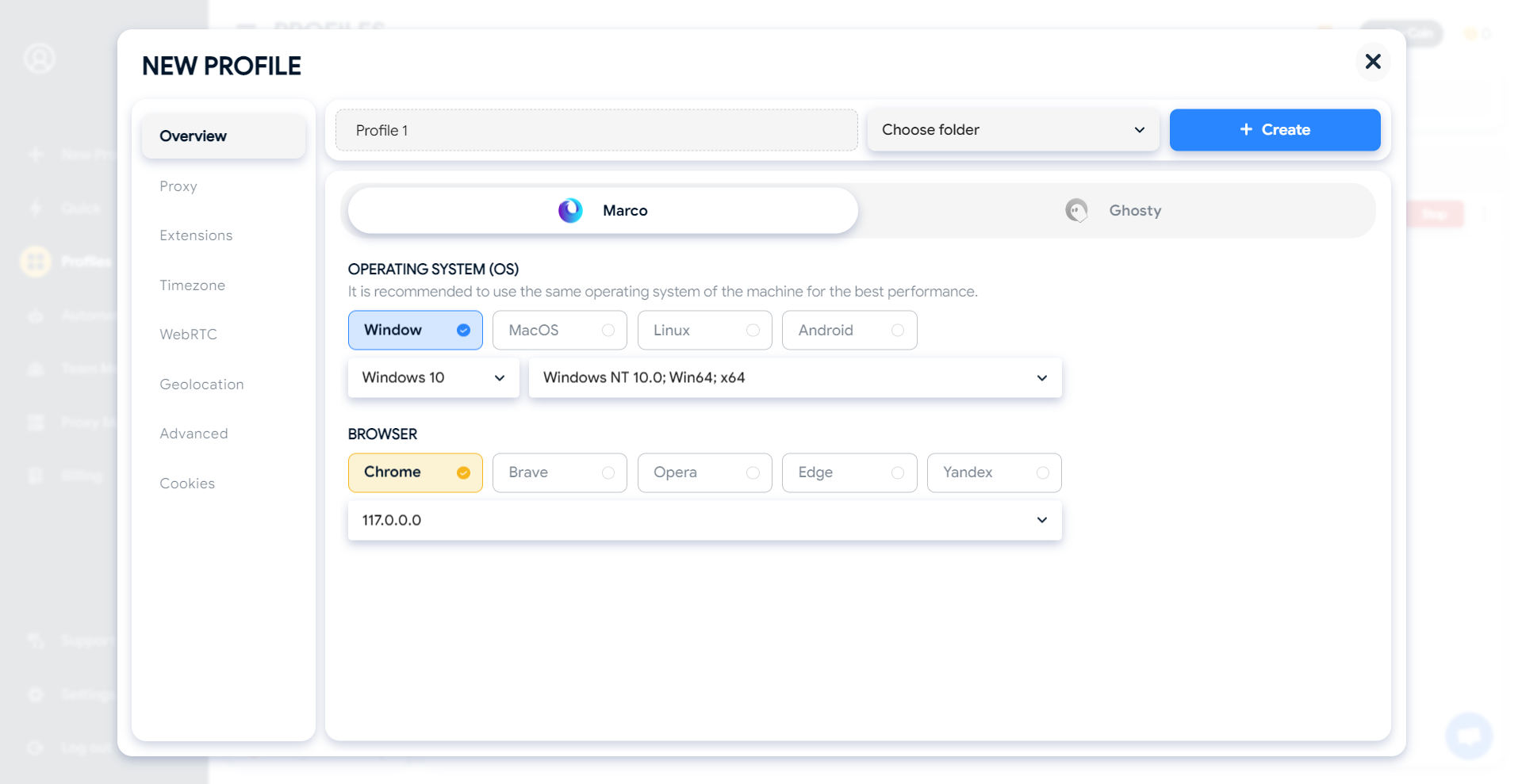
You can also customize your browser fingerprint with Hidemyacc. It randomly generates different profiles with unique browser fingerprint parameters such as user-agent, operating system, screen resolution, timezone, Mask Canvas, WebGL, Hardware concurrency, and device memory.

Hidemyacc profile
Hidemyacc profile

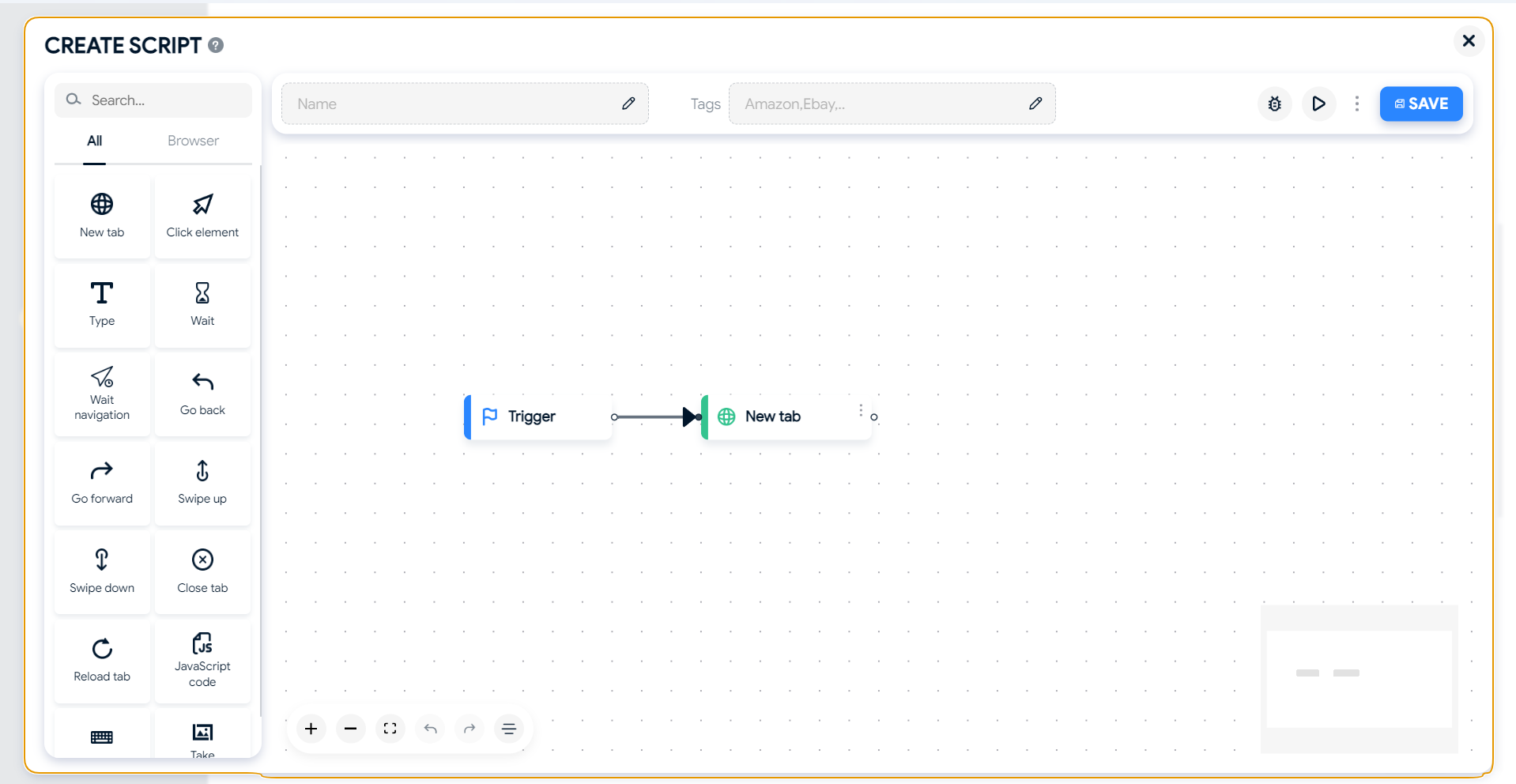
Moreover, if you want to automate repetitive tasks like warming up accounts, seeding, or browsing websites without triggering Cloudflare's bot detection, you can use Hidemyacc's Automation feature. It enables you to create batches of automation scripts that simulate mouse and keyboard actions like a real human, all while running on multiple Hidemyacc profiles.

The Antidetect browser, Hidemyacc, will be your most suitable choice when it comes to managing multiple accounts and ensuring they bypass Cloudflare effectively. It not only supports adding proxies but also conceals your original identity, making you appear as a real human user.

Hidemyacc automation

Final thoughts

In a rapidly evolving digital landscape, the need to bypass Cloudflare checks has become more crucial than ever. understanding the methods to circumvent Cloudflare's defenses is an invaluable skill for anyone, especially for those who working in making money fields.

Hidemyacc, with its advanced features, stands out as a reliable solution for modifying browser fingerprints, allowing users to seamlessly bypass Cloudflare and appear as genuine human traffic. Stay ahead of the game and ensure your online activities remain unrestricted by employing these strategies.

>>> Related article:

promo-hidemyacc

Read more

What is a cloud phone Android? A complete overview

What is a cloud phone Android? A complete overview

Managing multiple app accounts or running Android software without physical devices is becoming essential. A cloud phone android solves this by letting you own a virtual device running on the cloud, controlled via browsers or apps. This article analyzes how it works, popular services, and setup steps for efficient use.

logo Hidemyacc circle
Leaf Browser review: is it still worth using in 2026?

Leaf Browser review: is it still worth using in 2026?

Once a popular choice for its speed and low system requirements, Leaf Browser has lost its edge. After years without updates, it now shows severe flaws in security, account management, and anti-detect capabilities. Is it still worth using in 2026, or is it time for an alternative? This detailed leaf browser review will give you the answer.

logo Hidemyacc circle
What is a Cloud Browser? Guide to Cloud Browsers

What is a Cloud Browser? Guide to Cloud Browsers

Cloud Browser (cloud browser) is a model where the browser runs on remote server infrastructure instead of processing directly on the user’s device. Thanks to flexible access, enhanced security, and centralized management, this technology is increasingly used in areas such as remote work and software testing. So how does a cloud browser work, what are its advantages and limitations, and is it suitable for everyone? Let’s explore in this article.

logo Hidemyacc circle
What is a virtual browser? Comparison with regular browsers

What is a virtual browser? Comparison with regular browsers

Virtual browsers are increasingly used by individuals and businesses to manage multiple accounts on a single device. However, not everyone clearly understands what a virtual browser is, how it works, and how it differs from regular browsers like Chrome or Edge. In this article, we will explore how this tool operates, the benefits it brings, and the important criteria for choosing the right one for your needs.

logo Hidemyacc circle
How to use a link bypasser for shortened links?

How to use a link bypasser for shortened links?

Shortened links are becoming increasingly popular but often come with ads, timers, or mandatory tasks. Users lose time waiting, watching ads, or completing intermediate steps before they can access the actual content. In this article, Hidemyacc will provide a fast and safe solution using a link bypasser to help you completely skip those cumbersome steps.

logo Hidemyacc circle
What is Warmup Cache and How to Use It to Speed ​​Up Your Website?

What is Warmup Cache and How to Use It to Speed ​​Up Your Website?

Warmup cache is a technique that helps a system pre-load data into the cache before actual users access it. This approach is commonly used to reduce cold cache issues, improve response speeds, and limit pressure on the server after deployment, a cache purge, or during sudden traffic spikes. In this article, Hidemyacc will help you understand what warmup cache is, when to use it, and how to implement it more effectively in practice. The goal is not just to speed up the first request, but also to maintain more stable performance when the system begins to handle a load.

logo Hidemyacc circle