¿Sabías que tus movimientos en línea son como un libro abierto? Los sitios web y las plataformas vigilan en silencio lo que haces y recopilan mucha más información sobre ti de la que imaginas. No solo están fisgoneando, sino que también usan tus datos para enviarte anuncios y otras cosas.
¿Alguna vez has sentido la necesidad de mantener a salvo tus secretos en línea? No eres el único. Muchas personas están probando PRIVACY BROWSER, que son como escondites secretos para tu yo en línea. Su objetivo es garantizar que tu identidad en línea y lo que haces se mantengan fuera de los ojos de los sitios web que recopilan datos.
En esta publicación de blog, analizaremos qué son los navegadores privados y cómo pueden ser sus guardaespaldas en línea, manteniéndolo a salvo de las miradas indiscretas de los sitios web.
¿Qué es un navegador de privacidad?
Un navegador privado, también conocido como navegador privado o modo incógnito, ofrece a los usuarios la posibilidad de navegar por Internet sin dejar ningún rastro de sus actividades en línea, como el historial del navegador.
Al utilizar un navegador privado, las personas pueden proteger su identidad en línea y evitar que los sitios web controlen sus actividades digitales. Si bien es importante tener en cuenta que los navegadores privados no pueden ocultar por completo su verdadera identidad, sí desempeñan un papel crucial para ayudar a las personas a proteger su privacidad en línea en gran medida.
¿Cómo elegir el navegador de privacidad adecuado?
Cuando adquieres una computadora o un teléfono nuevo, generalmente viene con un navegador predeterminado y la mayoría de las personas se quedan con él. Pero ¿sabías que hay un mundo de navegadores privados esperándote? Aquí hay dos factores clave que debes tener en cuenta al seleccionar el navegador privado perfecto.
En primer lugar, un buen navegador privado debería protegerte de identificaciones no deseadas y de seguimiento entre sitios. Los sitios web y los anunciantes rastrean constantemente cada uno de tus movimientos y recopilan tu información para personalizar los anuncios y captar tu atención.
En segundo lugar, considere lo que hace un navegador de privacidad con los datos que recopila de los usuarios. ¿Alguna vez pensó cuánto valen sus datos? Para los anunciantes y las empresas de marketing, son como oro. Pueden vender sus datos a terceros y obtener ganancias sustanciales. Los cibercriminales siempre están al acecho de información de los usuarios, especialmente de aquellos que no usan un navegador seguro. Elegir sabiamente puede marcar la diferencia a la hora de mantener sus datos seguros.
3 formas de navegar de forma más privada
Cuando se trata de navegar de forma privada, muchos usuarios desean asegurarse de que los sitios web no rastreen su identidad en línea. Pero ¿sabe exactamente cómo rastrean los sitios web a los usuarios?
Emplean una técnica conocida como huella digital del navegador, que consiste en recopilar diversos parámetros de huella digital del navegador. Estos incluyen información del dispositivo como el sistema operativo, el tipo de navegador, la resolución de pantalla, la memoria del dispositivo y más, vinculada a direcciones IP, cookies e historial del navegador. Con esta información, los sitios web pueden rastrear fácilmente a los usuarios que intentan crear múltiples cuentas en sus plataformas.
Aquí hay 3 métodos comunes que puedes utilizar para navegar de forma más privada.
Modo incognito
Casi todos los navegadores cuentan con un modo de incógnito, que suele ser la opción preferida de quienes buscan una forma rápida y sencilla de ocultar su actividad de navegación. Con un solo clic, puedes ingresar al modo de incógnito. Sin embargo, si crees que este modo puede proteger completamente tu identidad de los sitios web, lamentablemente no es así.
Si bien el modo incógnito impide guardar el historial del navegador, no altera los parámetros de la huella digital del navegador, los sitios web aún pueden detectar que estás usando el mismo dispositivo y la misma dirección IP. Por lo tanto, a pesar de su utilidad, el modo incógnito no es suficiente cuando se administran varias cuentas.
Extensiones de privacidad
Las extensiones de privacidad, como los modificadores de agente de usuario, las VPN y los bloqueadores de WebRTC, ofrecen una solución más conveniente, especialmente para aquellos que no quieren cambiar de navegador. Estas extensiones, que se encuentran e instalan fácilmente desde la tienda de aplicaciones oficial del navegador, no pueden alterar por completo la información de su dispositivo. Incluso con extensiones de VPN y modificadores de agente de usuario, los sitios web pueden rastrear su identidad en línea.
Navegador antidetección
Los navegadores antidetect son herramientas diseñadas específicamente para crear múltiples perfiles de navegador con diferentes huellas digitales de navegador. Esto evita que los sitios web detecten que estás usando varias cuentas en el mismo dispositivo. Aunque los navegadores antidetect no pueden cambiar tu dirección IP (para eso necesitas agregar un proxy), superan las limitaciones del modo incógnito y las extensiones. Cada perfil creado por los navegadores antidetect viene con un nuevo conjunto de parámetros de huellas digitales de navegador, lo que te permite ejecutarlos simultáneamente en el mismo dispositivo sin que los sitios web lo detecten.
Navegador antidetección Hidemyacc: la forma más segura de navegar
Antidetect browser Hidemyacc es una de las herramientas de antidetect browser más eficaces del mercado y permite crear perfiles independientes con parámetros de fingerprint personalizados. Desde el user agent y el sistema operativo hasta la concurrencia de hardware, la memoria del dispositivo y la resolución de pantalla, Hidemyacc te permite ajustar cada perfil para ayudar a que tus múltiples cuentas pasen desapercibidas ante los sitios web.
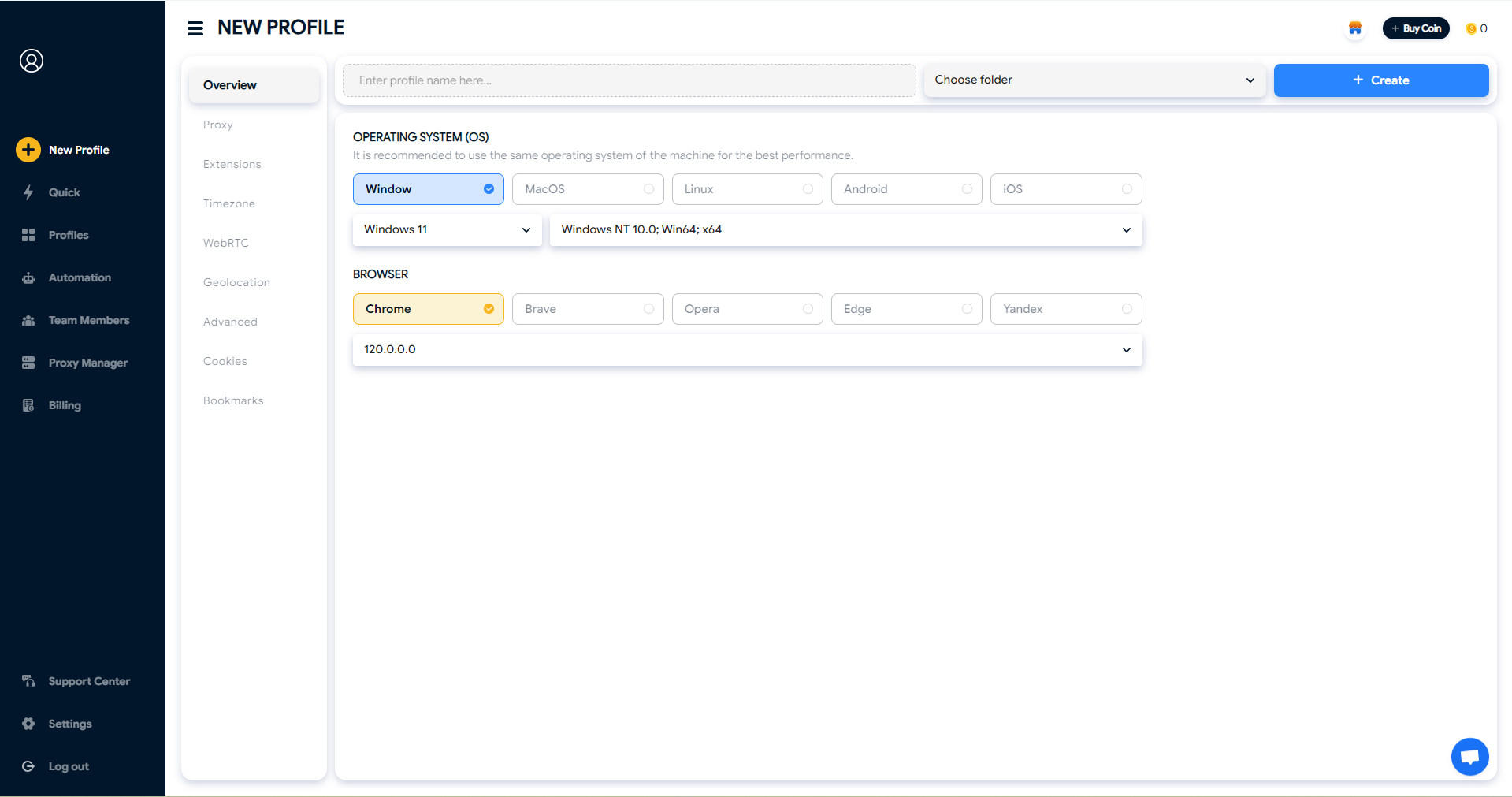
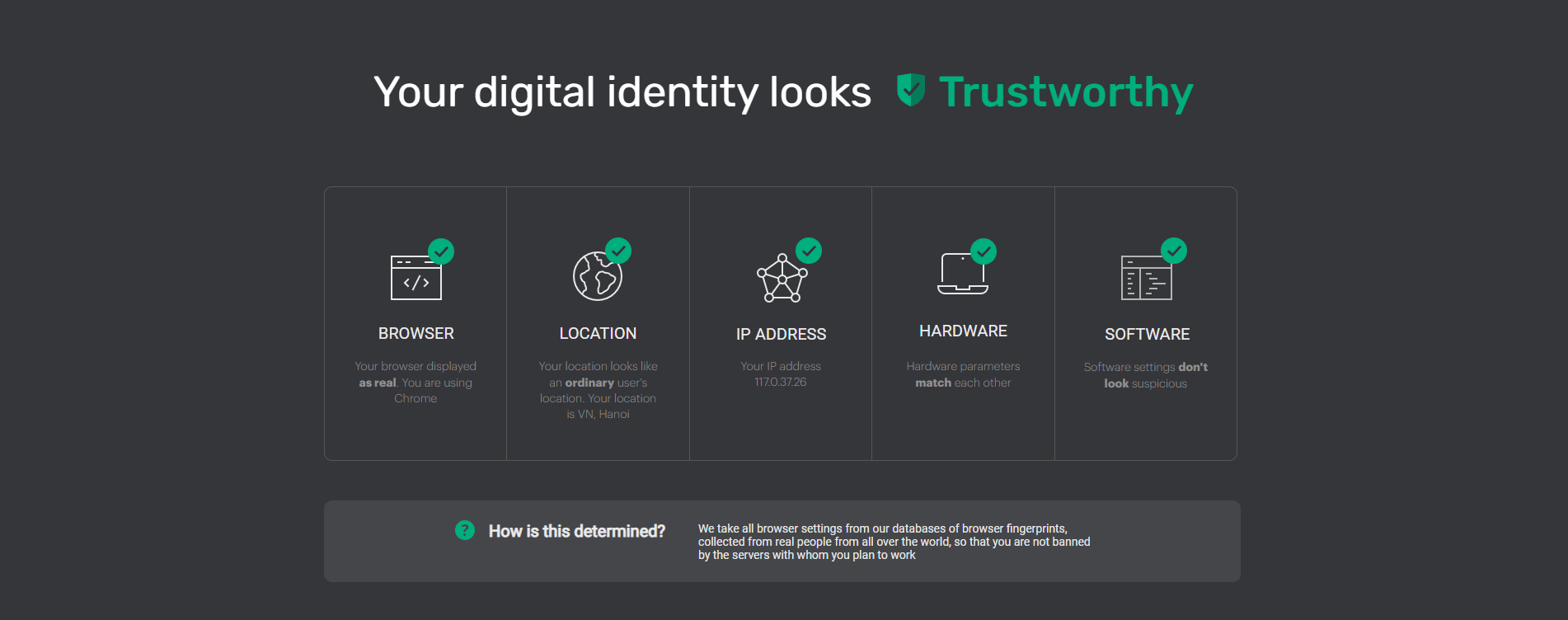
El navegador Marco de Hidemyacc cuenta con tecnología de vanguardia que le permite eludir de manera eficaz las comprobaciones web de huellas digitales del navegador, como IPhey o Pixelscan. Hidemyacc se mantiene a la vanguardia al actualizar constantemente su base de datos para reflejar las últimas configuraciones y ajustes que prevalecen en el mercado.
Además de crear perfiles con huellas digitales de navegador únicas, Hidemyacc ofrece funciones de colaboración fluidas. Esto incluye la capacidad de compartir derechos de acceso con sus equipos sin necesidad de compartir contraseñas de inicio de sesión.
Además, Hidemyacc viene con funciones de automatización que permiten a los usuarios simplificar sus tareas en línea de tres maneras: usando comandos de arrastrar y soltar, grabando acciones reales del usuario e importando scripts autocodificados.
Conclusión
La privacidad es un tema muy importante cuando estamos en línea, y los navegadores de privacidad intervienen para ayudar a los usuarios a proteger sus acciones en línea. Cada método tiene sus puntos fuertes y sirve para diferentes propósitos, por lo que puede elegir el que más le convenga.
Sin embargo, al manejar varias cuentas, es fundamental saber que los sitios web no solo recopilan su dirección IP, sino también detalles sobre los parámetros de la huella digital de su navegador. Esto significa que, incluso si utiliza el modo incógnito y un proxy para cambiar su dirección IP, los sitios web aún pueden identificarlo.
Ahí es donde un navegador antidetección resulta útil, y Hidemyacc se destaca con sus herramientas efectivas y poderosas.
Para experimentar los beneficios de esta combinación, descargue Hidemyacc ahora y comience su prueba de 7 días.
Si tienes alguna pregunta, comentario o sugerencia, no dudes en comunicarte con nosotros a través del soporte de Telegram, Skype o Facebook Messenger. Estamos aquí para ayudarte.
>> También te puede interesar:
- ¿Qué es Antidetect Browser? La herramienta de privacidad que supera a las VPN
- ¿Qué es la Huella Digital del Navegador? Cómo te rastrea en línea
- ¿Cómo evitar CAPTCHA eficazmente?
- Las 9 mejores herramientas gratuitas para comprobar la huella digital del navegador
- ¿Bloquear y falsificar la huella digital del navegador puede evitar el bloqueo de cuentas?
- Cómo te rastrean los sitios web y cómo proteger tu privacidad