Pinterest is no longer just a place to discover ideas and creative inspiration, but can evolve into a highly effective revenue generation engine if exploited properly. Instead of paying creators directly for views, Pinterest helps users reach high-intent prospects and drive traffic to online business infrastructures. Depending on your goals and available resources, you can leverage this platform to promote products, build websites, grow a personal brand, or implement other monetization frameworks. The breakdown below will help you clearly understand how to earn money on pinterest and choose the most suitable path forward.
1. Is learning how to earn money on pinterest actually viable?
Many assume Pinterest is merely a basic image viewing application used to clip pretty photos for design inspiration. In reality, it represents a massive customer acquisition engine that MMO operators can exploit to construct sustainable, long-term income streams. To understand the true potential of this platform, let's look into how cash flow operates inside the Pinterest ecosystem.
1.1. Through what mechanism does Pinterest monetization function?
The single most important baseline to grasp regarding how to earn money on pinterest is: Pinterest does not pay creators based on view counts like YouTube or TikTok do. You will receive zero direct payouts simply because your video or photo pins rack up high view numbers.
Instead of sharing native ad revenue distributions, Pinterest operates as a visual search engine, guiding high-intent users directly to your external sales landing pages. Consequently, operators generate income by compelling users to click on their high-quality Pins, channeling them into these backend tracks:
- A personal website or authority blog to monetize views via ad networks or product review posts.
- E-commerce product pages where clients can place direct orders.
- Affiliate tracking links to earn commission distributions when a user purchases a partner's product.
- A service landing page or custom online course modules taught directly by you.
Pinterest acts strictly as an intermediate discovery channel helping you harvest targeted, organic traffic for free. Your actual business revenue depends entirely on the monetization infrastructure you establish on the backend.
1.2. Why do digital entrepreneurs select Pinterest for monetization?
While customer acquisition on mainstream social networks grows increasingly dense and cost-prohibitive, Pinterest stands out as a highly popular choice for organic digital marketing due to several unique platform advantages:
- Content commands an exceptionally long shelf-life: A single well-optimized image Pin can continue to appear in search metrics and draw outbound clicks months or even years after deployment. Your assets do not fade out or suffer rapid reach drops typical of feed-based architectures like Facebook or TikTok. This allows you to produce content once and reap stable, long-term traffic flows.
- Pinterest users possess high purchasing intent: The majority of consumers accessing Pinterest are actively searching for design ideas, creative guides, or direct commercial goods to buy. This gives Pinterest traffic a significantly higher data value and conversion potential compared to generic social feeds.
- A large pre-existing follower count is not required: Pinterest distributes content utilizing keyword queries and topical relevance markers rather than account follower size. Consequently, even a completely fresh profile can reach thousands of users if optimized correctly.
Beyond content distribution advantages, Pinterest offers immense versatility. You can seamlessly combine differing monetization formats—such as affiliate marketing, e-commerce, or freelance services—depending on your execution capabilities and interests.
Pinterest is an optimal track because it delivers long-term traffic margins without demanding high follower metrics right from the start. Operated correctly, it serves as a highly robust engine for sustainable online income.
2. Prominent pathways on how to earn money on pinterest today
Now that the operational mechanics of Pinterest are clear, let's deep-dive into the concrete operational frameworks you can apply to extract real-world revenue from the platform.
2.1. Affiliate marketing monetization funnels
Affiliate marketing on Pinterest is a model where you promote third-party products or services using trackable referral links. When a user clicks through your Pin's affiliate link and completes a valid purchase, you earn a designated commission dividend from the vendor. This represents one of the most accessible methods on how to earn money on pinterest because it requires zero personal inventory design, supply chain management, or order fulfillment overhead.
Advantages
The affiliate marketing track introduces several powerful business benefits:
- Requires zero upfront product production capital or inventory storage costs.
- Generates long-term passive revenue; historical Pins continue to harvest commissions.
- Scales seamlessly across multiple content niches or distinct affiliate networks concurrently.
These structural advantages make it an ideal starting point for operators who lack extensive digital marketing experience.
Limitations
Conversely, this model presents distinct operational hurdles that you must account for:
- Commission rates can be modest, often floating between 1% and 10% depending on the industry sector.
- You are bound to the policy terms of external affiliate networks, which can alter rates or shut down parameters without warning.
- Demands substantial traffic volume tiers to generate significant net income streams.
Understanding these constraints allows you to craft a more realistic visual strategy and structure your production time efficiently.
Crucial compliance rules for affiliate links on Pinterest
While Pinterest supports direct affiliate link mapping, individual partner programs maintain their own compliance frameworks. Always review network rules prior to deployment. Many operators choose to channel Pinterest traffic to an intermediate bridge blog or customized landing page before directing users to the final affiliate link, maximizing conversion optimization control.
2.2. Driving traffic to an authority website or niche blog
If you prefer not to engage in direct product sales on Pinterest, you can deploy the platform as a traffic pipeline. Instead of monetizing directly inside your Pinterest pins, your business revenue is generated via monetized assets established on your external website. The structural framework functions as follows:
- Pinterest serves as your primary content distribution channel, catching search queries and guiding users from image results to your website domain.
- Every visual Pin you deploy acts as an independent customer entry node, channeling users directly to informational blog posts or custom landing pages matching their intent.
By executing this routing strategy, you build a steady baseline of daily readers hitting your domain. Niche bloggers favor this approach because Pinterest's features are perfectly aligned with organic traffic acquisition goals.
Why is Pinterest optimal for driving traffic?
Unlike standard social applications that suppress outbound links to keep users trapped inside their app ecosystems, Pinterest natively encourages outbound link click navigation. Core highlights include:
- Content indexation relies on search keywords and intent relevance rather than raw follower counts.
- A single premium Pin can establish a multi-month traffic line back to your domain.
- The user base searches for tutorials, operational blueprints, and product comparisons, which maps perfectly to informative blog content.
Consequently, Pinterest ranks as a premier, sustainable engine to pump steady organic traffic to external web properties.
Website revenue streams
Once you secure a stable incoming traffic flow to your own website, you can activate multiple monetization layers concurrently:
- Google AdSense, Ezoic, or Mediavine: Earn revenue via display ad networks.
- Affiliate Marketing: Embed product referral links within informational posts to claim commission payouts.
- Sponsored Content: Collaborate with corporate brands to publish targeted promotional articles.
- Direct Services or Digital Goods: Leverage your blog authority to close service clients or digital asset orders.
Blending multiple streams raises your income stability and optimizes your domain's long-term lifetime value.
Advantages
Funneling viewers to an independent website property yields profound long-term assets:
- Sourcing audience traffic from Pinterest is free and maintains high long-term resilience.
- You possess absolute freedom to layer multiple income models on a single web property.
- Your blog text assets and Pinterest visual assets reinforce one another's search indexing.
These strengths help you scale a digital asset whose capital value appreciates over time. However, you must evaluate the processing challenges of this model.
Limitations
On the downside, managing an independent domain requires navigating distinct roadblocks:
- Demands a high initial investment of execution time and content production to build both the blog archive and Pinterest profile presence.
- Display ad revenue demands massive traffic volume tiers to reach substantial income figures.
- Your business pipeline remains bound to algorithm updates rolling out from both Google and Pinterest.
Bypassing platform dependencies by anchoring traffic to your own domain builds a highly resilient business model that grows more secure over time. Implemented strategically, Pinterest evolves from a simple image board into a robust growth engine for your digital real estate.
Recommended reading:
10 strategic blueprints to promote affiliate links for beginners
Pinterest affiliate marketing: Comprehensive A-to-Z execution guide to earn online
h3 id="-2-3-b-n-s-n-ph-m-tr-n-pinterest-">2.3. E-commerce and direct product sales
Retailing goods directly via Pinterest is an elite monetization path, particularly optimized for e-commerce store operators or brands looking to scale product visibility. Given the platform's focus on aesthetics and curation, Pinterest introduces products naturally into the consumer's inspiration phase.
How does Pinterest support direct product sales?
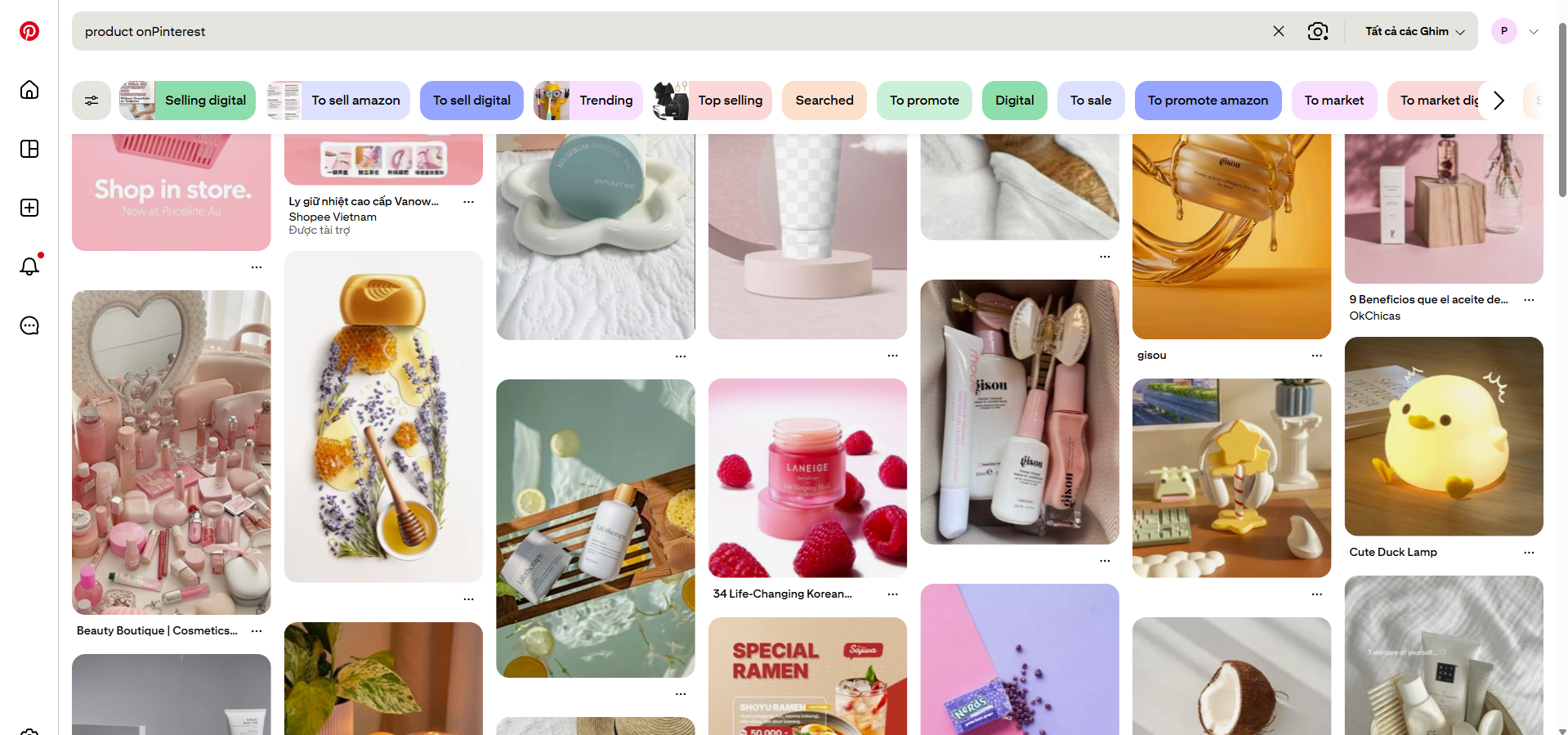
Pinterest empowers e-commerce workflows through dedicated Business accounts and the Product Catalog ingestion engine. This feature pipeline syncs inventory catalogs from your store domain directly onto Pinterest's interface.
The ingestion system bridges natively with commerce architectures like Shopify, Etsy, or WooCommerce to auto-generate visual product feeds, converting inventory into active Shopping Pins.
Every Shopping Pin cleanly aggregates essential consumer markers:
- Product title metadata.
- Real-time pricing data.
- High-definition inventory imagery.
- A straight outbound link directing to your store checkout page.
This allows consumers to inspect details and jump straight to purchase the moment an idea clicks, removing intermediate navigation friction.
High-performing e-commerce niches
Not every inventory asset fits Pinterest's specific demographic profile. High-visibility categories that display beautifully in vertical grids always capture top performance tiers, including: fashion attire and lifestyle accessories, boutique furniture and home décor accents, maternity and baby goods, custom pet supplies, and Print-on-Demand (POD) apparel.
These products integrate seamlessly with user search paths on Pinterest, which prioritize design aesthetics and shopping inspiration.
Advantages
Operating a direct storefront inside the discovery matrix yields substantial operational leverage:
- Introduces your brand assets to shoppers precisely when they are plotting a purchasing decision.
- Shopping Pins compress the distance between discovery and checkout, raising conversion rates.
- Facilitates advanced Pinterest Ads deployment and remarketing funnels to scale your customer list.
These strengths maximize your transaction conversion efficiency, funneling high-intent buyers straight to your payment gateway.
Limitations
Alongside clear conversion benefits, this model requires managing distinct backend infrastructures:
- Demands a fully realized external e-commerce architecture (like a dedicated site or marketplace shop), making it unviable if you lack pre-existing merchant setups.
- Pinterest Shopping features hold maximum performance weight primarily within the US and western European markets; targeting other regions requires secondary localized strategies.
- Mandates serious capital investment into high-end photography and design assets to compete against established marketplace vendors.
Therefore, securing success demands proper alignment across your fulfillment backend, visual asset quality, and distribution parameters.
2.4. Retailing high-margin digital products
Digital products encompass information content or software files distributed completely online. Buyers download or access assets instantly upon payment, removing physical supply chain constraints. These knowledge assets boast unique business advantages: they require zero manufacturing duplication costs per sale, incur zero shipping overhead, and enjoy infinite scaling limits.
Popular digital assets on Pinterest
A broad array of digital assets scales effectively on Pinterest, particularly items that streamline workflows, educate, or assist in content creation:
- E-books, tactical blueprints, and step-by-step how-to manuals.
- Canva templates (social media layouts, CV matrices, pitch decks).
- Notion workspace templates (project managers, personal finance trackers, habit logs).
- Lightroom presets or custom photo editing filters.
- Video-based online courses or data-rich PDF educational models.
These asset brackets serve extensive workflow automation needs, matching the educational and design search paths typical of Pinterest consumers.
Advantages
Monetizing your intellectual property via digital delivery outputs incredible structural margins:
- Produce the asset once, then execute infinite sales at zero marginal unit cost.
- Ultra-high net profit margins due to the complete absence of physical materials, shipping logistics, or inventory overhead.
- Blends seamlessly into affiliate links or blog traffic funnels to capture multi-layered revenue.
These parameters allow you to maximize revenue without managing complex supply chains or warehouse real estate.
Limitations
Despite elite margins, scaling a digital info business requires navigating specific hurdles:
- Demands an intense upfront investment of execution time to craft a truly high-quality, valuable product.
- Saturated entry barriers in standard segments like basic Canva templates, which demands sharp positioning to stand out.
- Requires building deep upfront credibility before cold traffic triggers a purchase transaction.
Anticipating these hurdles enables you to design highly targeted assets that address precise consumer pain points, securing smoother conversion workflows.
2.5. Acquiring high-ticket freelance clients
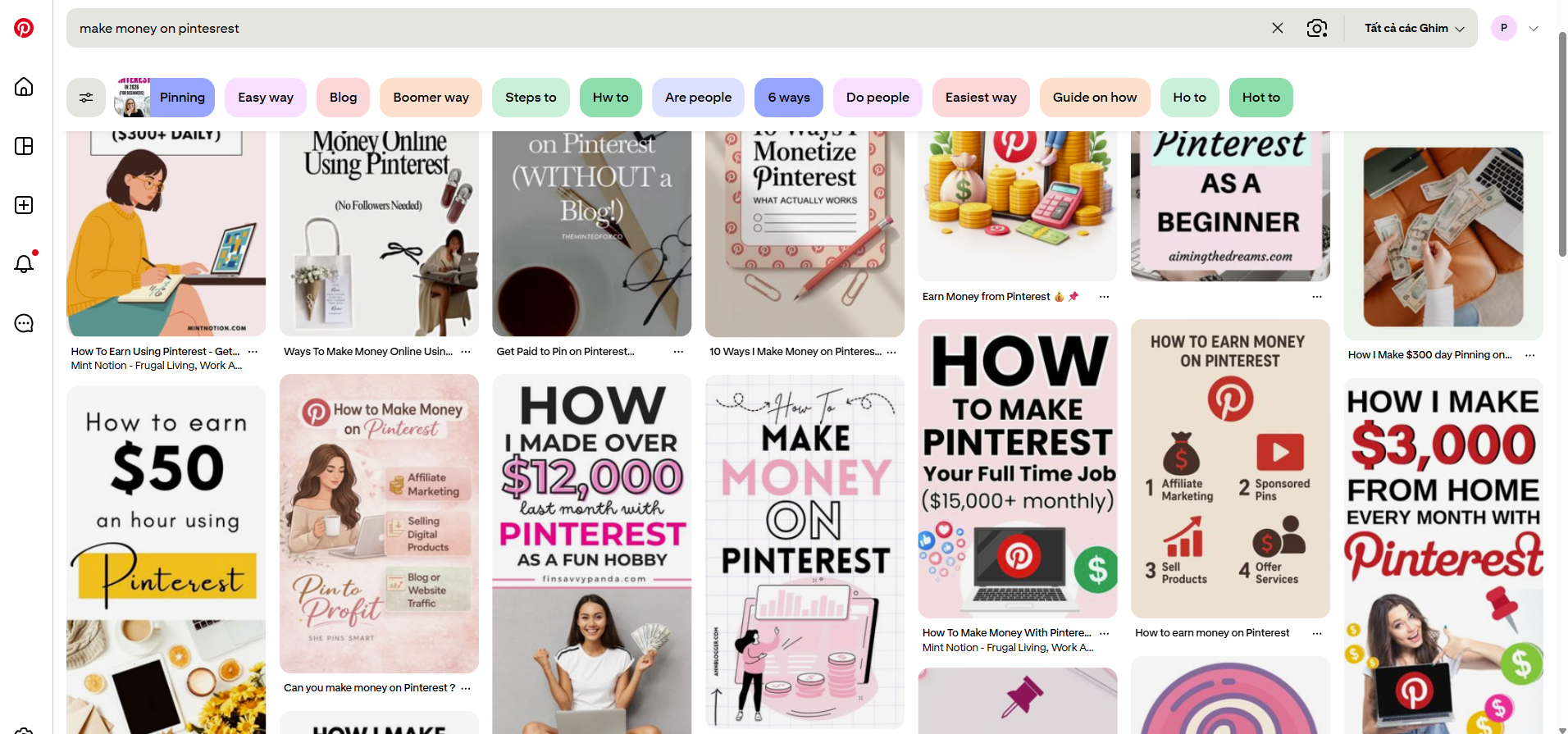
Using Pinterest for freelance client acquisition involves transforming your profile into an organic, inbound portfolio matrix. Instead of chasing leads via cold outreach or saturated bidding sites, you build specialized technical content that prompts high-value clients to seek you out directly.
Freelance services optimized for Pinterest
Pinterest is perfectly matched for services that are visual, creative, or tied directly to digital content infrastructure. These vertical areas translate beautifully into graphic pins and informative workflows:
- Graphic design, corporate identity development, and brand packaging.
- Copywriting, SEO content production, and email marketing copy.
- Search engine optimization (SEO) and content marketing strategy execution.
- Social media management and dedicated Pinterest growth marketing.
- Web design, landing page architecture, and custom Shopify development.
These functional sectors command high market demand and align smoothly with visual authority building on the platform.
Advantages
Deploying an organic inbound service funnel via Pinterest yields direct real-world returns:
- Requires zero initial financial capital or software investment to launch your funnel.
- Outputs significantly higher immediate revenue margins per transaction than low-ticket affiliate clicks or single template sales.
- Fosters direct, long-term retainers and high-value partnerships with business clients.
This approach is highly viable for converting your personal technical skill sets into immediate, high-margin cash flow.
Limitations
Alongside premium service margins, understand the specific operational constraints of this track:
- Pinterest is not a standard transactional freelance marketplace; it demands patience to scale organic profile trust.
- Income is directly tied to your personal execution hours, meaning it lacks the automated scaling leverage of digital products.
- Requires pairing with secondary networks (like LinkedIn or a dedicated site portfolio) to maximize total client contract closures.
Mapping out these details helps you stabilize your client delivery pipelines and structure your client acquisition campaigns professionally.
2.6. High-ticket courses and premium consulting
Selling online courses or advisory consulting on Pinterest is a model where you monetize your expertise, real-world case studies, or structured personal direction. Unlike basic low-cost digital goods, this model scales based on your deep specialized authority and proven track record.
Who fits this monetization architecture?
This framework is optimized for operators who possess verified industry execution data or deep technical mastery within a vertical. You must hold the capability to guide clients to solve complex roadblocks or hit precise, measurable business outcomes through your frameworks.
High-value niches for advisory courses
Premium training models and consultancy tracks typically focus on high-ticket, high-demand operational sectors:
- Growth marketing and digital business architecture.
- E-commerce systems (Etsy automation, Shopify scaling, global supply chains).
- UI/UX design and enterprise content creation frameworks.
- Personal wealth management, asset allocation, and investing.
- Corporate productivity systems and operations scaling.
These sectors capture high market valuations, hold broad professional audiences, and translate smoothly into high-ticket coaching programs.
Advantages
Trading your specialized industry expertise outputs incredible brand authority and financial yield:
- High average contract value; a single premium client delivers multiple times the revenue of low-ticket affiliate networks or single template transactions.
- Cements a highly defensible personal brand authority and long-term private community network.
This is the ultimate track if your goal is long-term business equity growth and scaling your personal market valuation over time.
Limitations
However, securing high-ticket contract conversions requires navigating complex trust funnels:
- Demands substantial runway time to cement deep industry trust before cold audiences convert into high-ticket buyers.
- Requires establishing robust post-sale student support systems, group calls, or audit structures.
- Revenue remains strictly bound to your personal brand value and performance consistency.
Consequently, this model requires a serious commitment to educational depth, asset construction, and precise personal market positioning.
2.7. Secured corporate brand partnerships
Brand partnerships involve direct commercial contracts between you and a brand vendor, where the corporate entity pays a premium for you to produce native content that highlights or reviews their service catalog on Pinterest.
Unlike affiliate link tracking, your contract yield does not depend on immediate transaction volumes. Instead, you secure a guaranteed fixed fee per campaign or asset batch according to your contract parameters.
Common partnership formats
Corporate brand partnerships on Pinterest deploy across several structural formats, depending on the vendor's growth targets and your unique style:
- Sponsored Pins: Designing high-end visual Pins highlighting a product according to corporate brand asset briefs.
- Product Stress-Testing / Reviews: Receiving early access to inventory or software to test out and document real-world performance.
- Integrated Campaigns: Joining broader multi-channel product launches, deploying a series of Pins under a designated seasonal theme.
This allows your content to stay fluid and natural while opening up diverse corporate sponsorship avenues.
How to attract corporate brand sponsors
To capture corporate brand visibility, raw follower counts are secondary; the primary asset you must demonstrate is a highly defined audience demographic path.
- Build an audience profile with razor-sharp data metrics tracking consumer demographics and user interests. Corporate growth teams look for an exact alignment between your audience profile and their target buyer persona rather than empty follower counts.
- Maintain clean, high-end visual consistency across your boards.
- Proactively approach matching brand public relations teams with a crisp media kit documenting your system impressions, deep interaction metrics, and signature content style.
Completing these foundational steps positions you as a professional partner, increasing high-tier brand inquiries.
Advantages
Dealing straight with corporate vendors outputs excellent financial stability and channel authority:
You claim guaranteed upfront revenue per marketing campaign, which you can smoothly overlay with backend affiliate links to maximize total yield from a single content batch. Beyond direct financial returns, brand partnerships elevate your professional credibility, unlocking consecutive long-term integration deals with alternative industry vendors.
Limitations
On the downside, managing brand contracts demands established profile maturation:
- Corporate entities almost exclusively restrict deals to accounts showing stable historical activity logs and distinct niche authority, locking out unproven fresh setups.
- Pinterest is not yet the primary marketing deployment vehicle for many brands, so you must present comprehensive empirical engagement metrics to close deals.
2.8. Participating in Pinterest Creator Rewards
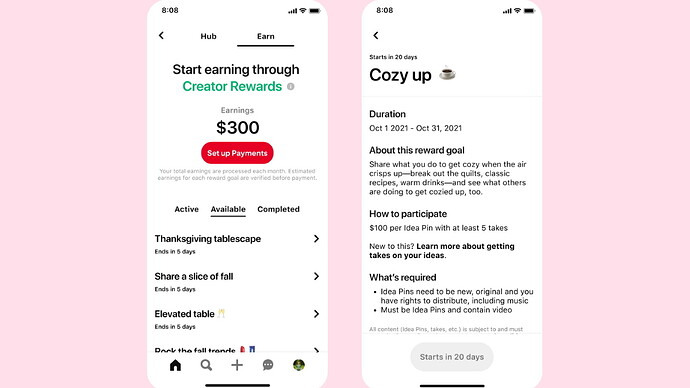
Creator Rewards is an internal in-platform fund established by Pinterest to directly compensate creators for producing native high-performance content, specifically Idea Pins (short-form multi-page visual narratives or tactical step-by-step video formats).
How it works
The system operates on an incentive matrix tied to seasonal goals or monthly content challenges published by Pinterest inside the creator dashboard. Creators deploy original Idea Pins matching the specific challenge brief onto their channel. Once an asset clears the benchmark performance indicators—such as minimum save thresholds or organic view counts—Pinterest distributes direct cash rewards based on performance weight.
Eligibility criteria
To access the internal Creator Rewards portal, an account profile must satisfy explicit platform terms:
- Operate a formal Pinterest Business account mapped in an eligible target country.
- Clear the designated baseline follower thresholds and monthly metric minimums.
- Maintain a pristine account history fully compliant with Pinterest's community guidelines.
Limitations
While an excellent feature, operators face severe geographic restrictions:
- Currently, the Creator Rewards program is deployed exclusively within select high-tier western markets like the US, meaning international creators in unsupported locations cannot access the fund directly.
- Revenue is highly variable, dictated by unpredictable platform challenge parameters and changing cyclical budget allocations.
Consequently, treat this fund as a secondary revenue supplement rather than the primary cornerstone of your online business model.
2.9. Matrix scaling via multiple Pinterest profiles
Once you master keyword indexation paths and establish a converting content template, scaling operations by running multiple Pinterest accounts concurrently is a powerful approach to amplify reach metrics and insulate your income lines. However, this strategy demands a highly organized framework.
When is a multi-account matrix recommended?
Avoid expanding account numbers blindly; deploy a multi-profile matrix only when your operational data shows distinct expansion indicators:
- When deploying distinct e-commerce stores or running separate affiliate niches that require individual brand boundaries.
- Managing corporate Pinterest assets for clients or agency partners.
- Isolating individual web domains, blogs, or referral campaigns to isolate performance data cleanly.
Dividing assets ensures target audiences receive coherent topical feeds. However, as profile counts scale up, manual management challenges arise.
Roadblocks in multi-account management
Relying on standard manual device configurations to handle massive account clusters triggers critical operational friction:
- Substantial time waste jumping back and out of individual account panels manually.
- High error risks concerning overlapping login credentials, mismatched copy, and data entries.
- Difficulty tracking aggregated performance metrics accurately across various separate projects.
These logisitical bottlenecks easily trigger administrative overload, tanking your overall output efficiency.
Utilizing dedicated management tools to secure your matrix
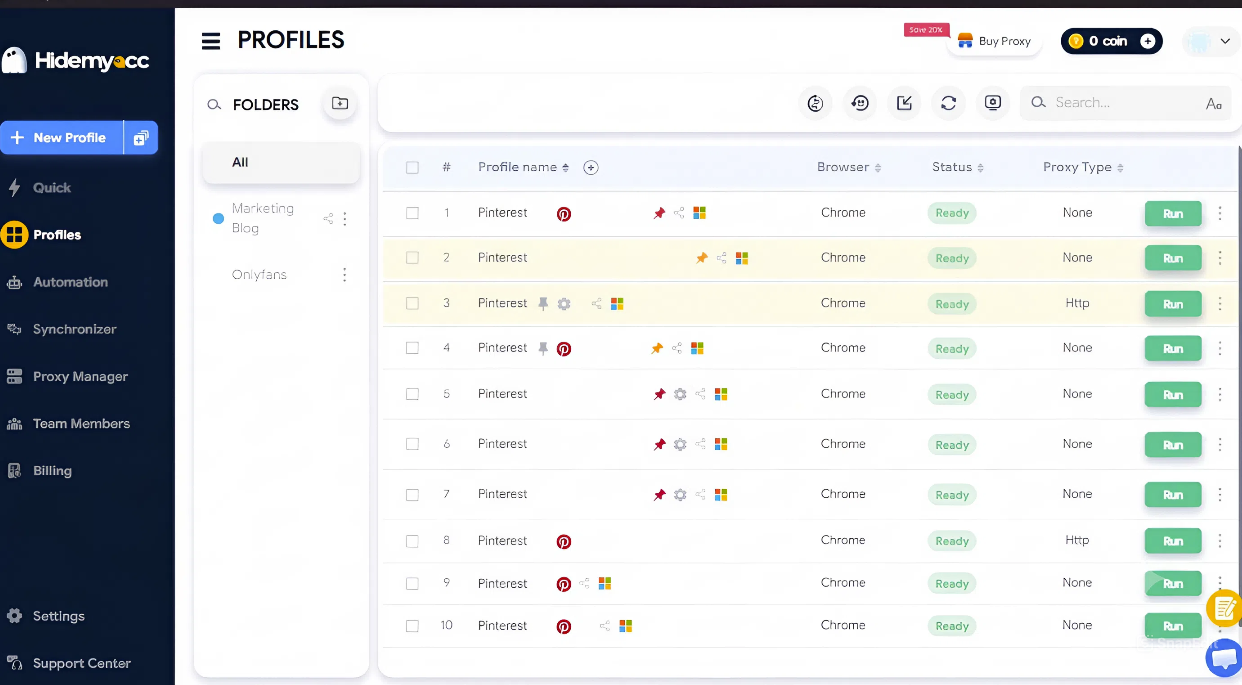
To scale a multi-profile matrix without operational friction, manual logging must be replaced with dedicated isolation systems. Advanced digital marketers utilize the antidetect browser Hidemyacc to automate and secure this workflow.
Hidemyacc enables you to establish fully separate browser profiles on a single machine. Every profile is customized with a distinct simulated browser fingerprint—randomizing device specs, operating system emulations, language headers, local storage nodes, and digital signatures.
When you pair each browser profile with an independent, dedicated proxy connection, each separate Pinterest account operates as if it is connecting from a completely unique physical machine and network address. This isolates session data completely. You can launch, run, and manage an extensive fleet of Pinterest accounts concurrently without data cross-contamination or facing automated multi-accounting suspensions. Each account stays locked within its secure container, ensuring maximum long-term stability for your traffic funnels.
This framework is highly tailored for independent freelancers, digital growth agencies, or extensive MMO teams looking to scale user reach and diversify revenue channels securely.
3. What are the income limits when monetizing Pinterest?
The structural comparison matrix below outlines the entry barriers, difficulty, and earning caps across different Pinterest business models:
| Monetization Method | Initial Capital Needed | Difficulty Level | Time to First Revenue | Income Potential |
|---|---|---|---|---|
| Affiliate Marketing | Low | Medium | 1–3 months | Medium – High |
| Driving Blog Traffic | Low – Medium | High | 3–6 months | High |
| Physical Product Sales | Medium – High | High | 1–3 months | Medium – High |
| Digital Product Sales | Low | Medium | 1–2 months | High |
| Freelance Services | Very Low | Low | 2–4 weeks | Medium |
| Courses / Consulting | Low | High | 2–4 months | Very High |
| Brand Partnerships | None | Medium | 3–6 months | Medium – High |
| Matrix Multi-Accounting | Low – Medium | Medium – High | Dependent on model | Multiplies scale potential |
Depending on your starting baseline and technical resources, different channels will match your operation best. For beginners, affiliate networks or digital products represent highly safe launching points, as they require near-zero entry capital and support rapid testing. If you already operate an active blog or website asset, focusing on driving traffic from Pinterest maximizes your existing content archives while opening multiple ad and referral income layers simultaneously. Conversely, if you command verified technical skills, selling high-end freelance services or private consulting calls yields faster cash flow turnaround and premium average contract values.
Aligning your execution choice with your asset capacity right from the start saves substantial setup runway, preventing trial errors and establishing a clear path to scale channel performance efficiently.
Core pillars governing revenue generation on Pinterest
Your net financial yield on Pinterest extends far beyond simple raw view counts; it is heavily dictated by structural elements across your content framework and backend system design:
- Topical niche value: The specific market segment you select heavily governs your earning potential. Verticals tracking high commercial intent—such as personal finance, beauty curation, interior design, or premium fashion—capture superior conversion parameters because they map smoothly to direct purchase intents or premium affiliate networks.
- Pin graphic quality: The absolute design layout of each individual Pin decides whether a user arrests their scrolling and clicks through. Pins utilizing crystal-clear photography, compelling context text layouts, and precise target search mapping capture premium click-through rates (CTR), feeding high-intent traffic down to your target site or referral link.
- Chronological consistency: When you maintain a predictable, steady publication calendar, Pinterest's search indexing easily classifies your board topic, pushing your assets to the correct target audience segment over time.
- Backend funnel conversion: Pinterest strictly handles the front-end traffic acquisition stage; your actual dollar revenue is dictated by what happens after a user completes an outbound click. This places intense importance on your landing page copywriting, product market fit, and your checkout sequence optimization. If your backend infrastructure is weak, even massive incoming traffic flows will output flatline revenue results.
Optimizing these structural elements ensures your channel operates as a highly professional business, maximizing the lifetime value of incoming consumer traffic.
4. How to construct a high-performing Pinterest monetization profile
To secure sustainable, long-term revenue on Pinterest, abandon random image pinning. You must build your account utilizing a systematic structural workflow: from sharp niche selection and profile optimization to data-driven search keyword mapping and continuous funnel refinement.
4.1. Select a high-intent, profitable content niche
Your choice of niche represents the foundational blueprint that governs your entire downstream earning capacity on Pinterest.
A profitable niche must satisfy three system requirements simultaneously: you possess the ability to produce content for it over a long horizon, there is verified search query demand on the platform, and clear backend products or affiliate programs exist to extract revenue. Profit-yielding segments on Pinterest include home decoration, DIY craft tutorials, culinary recipes, style curation, personal finance systems, parenting guides, health and fitness training, and luxury wedding planning. Conversely, avoid ultra-broad categories like generic "lifestyle," as they blur your topical signals, or microscopic segments that lack the baseline traffic volume required to sustain a business model long-term.
4.2. Complete advanced profile optimization
Your personal profile page functions as your digital business card, dictating the crucial initial trust impression when users navigate to your channel feed.
- Your profile handle and display title must contain high-volume keywords relevant to your niche—rather than just an ambiguous personal name—to assist the platform's account indexation algorithms.
- The biography text must be concise and benefit-focused, stating exactly who you assist and how your boards solve their problem, bypassing generic descriptions.
- Complete the site claim process to unlock verified domain authority and gain optimal content indexation.
-
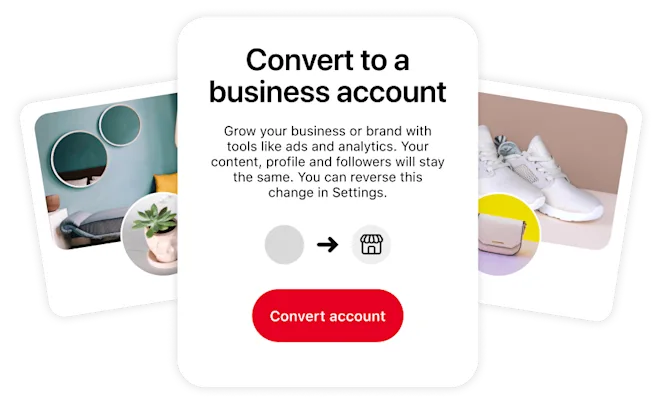
Important Note: If your goal is monetizing content, transition to a formal Business account from day one. This account type is completely free but unlocks critical professional tools unavailable to basic personal accounts—such as Pinterest Analytics to track deep audience performance data, Rich Pins to auto-sync metadata layers from your site domain, and formal merchant verification settings. These data tools are essential to measure click-through metrics, track outbound movement, and optimize your overall growth strategy.
4.3. Execute deep keyword research
Pinterest is fundamentally a search engine, meaning precise keyword mapping dictates whether your assets surface before users or stay buried in the archive.
Harvest profitable search terms by utilizing Pinterest's native search bar autocomplete suggestions, inspecting the "related searches" guided modules, or tracing historical macro shifts via Pinterest Trends. Once you isolate your keyword list, embed them into three critical structural positions: your Pin Title, the Pin description copy, and your Board titles. This alignment gives the platform clear semantic data signals, pushing your assets directly to consumers tracking those exact queries.
4.4. Design high-CTR visual Pins
Your image design directly controls whether a consumer arrests their scrolling behavior and executes an outbound click. Always use the platform's standard vertical ratio of 2:3 (1000x1500px), as this layout captures optimal real estate within Pinterest's grid system.
Deploy high-contrast color choices, highly legible bold fonts, and concise, high-impact text overlays that communicate the primary benefit of the underlying content. However, avoid stuffing excessive text blocks into a single image asset; your primary metric target is driving a click-through action, not explaining the whole article on the photo layer itself. Furthermore, engineer multiple visual variations of a Pin pointing to the same backend link to split-test layouts and isolate the highest-performing asset design.
4.5. Maintain an active, consistent publication calendar
System consistency is the primary growth catalyst within Pinterest's indexing algorithms. The recommended volume baseline ranges from 5 to 15 Pins per day, ideally spaced out evenly across the day rather than dumped in a single bulk upload session.
Integrate specialized scheduling suites like Tailwind into your workflow to automate post deployment, preserving your calendar rhythm while saving manual labor. Furthermore, maintain an optimal balance between publishing fresh original Pins and curated re-Pins from your niche at an 80/20 or 70/30 ratio, maximizing your authority while leveraging existing community assets.
4.6. Implement continuous data-driven optimization loops
Operating a professional channel demands moving past simple asset posting and entering continuous optimization tracks guided by real-world system data.
The core metrics requiring your attention are total impressions, outbound clicks, global CTR, and save rates. Among these, outbound CTR stands as your supreme north-star indicator if your goal is driving traffic. Pins tracking premium CTR metrics should be immediately cloned, repurposed, or scaled with matching variations to compound traffic gains. Conversely, if an asset tracks a high save rate but flatline outbound clicks, it signals that the graphic layout is visually appealing but the underlying copy or call-to-action lacks the conversion hook required to drive user movement. Re-evaluate and tighten the text overlay elements accordingly.
5. Fatal mistakes preventing success in Pinterest monetization
Many digital marketers launch Pinterest campaigns but fail to generate revenue. This shortfall rarely stems from a lack of effort, but rather from missteps across the core pillars of account architecture and funnel execution.
5.1. Selecting a non-monetizable niche
A frequent beginner error is selecting a niche based purely on personal hobbies without verifying if there is matching keyword search volume on Pinterest or viable backend products to support monetization. Under an unverified setup, even high content output will result in stagnant reach metrics and near-zero conversion value. The core focus must remain on actual market demand and search volume data rather than subjective personal preference.
5.2. Chasing empty view counts over outbound conversions
Evaluating channel health based on raw Pin impressions is a deceptive metric, as impressions do not map directly to business revenue. A high system view count does not mean consumers are genuinely engaged or clicking through your tracking links. The paramount metric that governs real business value is outbound clicks, as this represents the actual flow of high-intent consumers into your ecosystem. Without driving outbound actions, high visibility remains an empty vanity metric that outputs zero financial return.
5.3. Neglecting Pinterest SEO parameters
Pinterest matches content to users utilizing keyword indexing and semantic relevance signals; ignoring search optimization rules will prevent your assets from gaining system distribution. This represents a classic error where operators publish high-volume Pins but neglect to integrate specific, trackable search terms within titles, descriptive text layers, and board metadata cards. Consequently, the distribution algorithm fails to categorize your target demographic and restricts your content visibility.
5.4. Operating under an irregular posting schedule
Pinterest's distribution parameters favor accounts that show stable, highly predictable operational signals over profiles that deploy content in erratic, short-term bursts. Many creators upload intense batches during their first week and then leave the channel dark for extended blocks, destroying their account's momentum. Maintaining a rhythmic daily publication cadence yields superior system authority compared to scattered, uncoordinated content dumps.
5.5. Operating without a realized backend conversion infrastructure
Pinterest's native interface functions strictly as a front-end traffic acquisition node, not a transaction processor. If your backend lack specialized web architectures—such as conversion-focused blogs, product landing pages, or precise calls to action—incoming traffic flows fail to capture real business value. Focusing entirely on traffic numbers while neglecting the core transaction steps results in flatline conversion rates. Traffic only holds utility when channeled into a system engineered to capture revenue.
5.8. Dismissing data analytics and performance audits
Operating a channel without auditing performance metrics is equivalent to running a business blindly without clear direction. You remain unable to isolate which content frameworks are outputting top-tier results to scale them, and which are underperforming and require adjustments. Consistent analysis of system impressions, outbound clicks, and conversion data reveals true consumer behavior, letting you refine your strategy based on objective facts.
6. Conclusion
Succeeding in Pinterest monetization requires moving past a basic "post and pray" mindset and implementing a highly methodical business workflow that aligns content quality, search engine optimization (SEO), traffic routing, and backend conversion mechanics seamlessly. Once you master the platform's distribution logic and align it with a monetization model that matches your resource capacity, Pinterest transforms into a robust, sustainable engine capable of delivering scalable online revenue streams over a long horizon.
By building with structural discipline from day one, Pinterest shifts from a simple creative mood board into a highly dependable asset for your long-term digital business growth.
7. FAQ
1. Does Pinterest pay creators directly based on view metrics?
No. Pinterest does not operate an official native ad revenue sharing program similar to YouTube's framework. Outside of select country challenge pools like Creator Rewards, Pinterest issues zero direct financial payouts for raw impressions or views. Your earnings are generated on the backend based on how effectively you convert incoming Pinterest traffic into transaction revenues via affiliate links, direct storefront sales, or display ad networks running on your independent web domains.2. Are affiliate links prohibited on Pinterest?
Pinterest fully supports mapping affiliate links within your Pins, but requires transparent commercial disclosure (such as adding "#affiliate" or "#ad" within the descriptive copy block). Furthermore, specific external affiliate networks—including Amazon Associates, Shopee Affiliate, or specialized networks—enforce their own internal compliance rules regarding direct link deployment on Pinterest, making prior terms review essential.3. Can I successfully earn money on Pinterest without operating a website?
Yes. You can attach your affiliate referral URLs directly to your Pin configurations to monetize traffic without owning an independent domain asset. However, routing traffic to a dedicated website property significantly expands your monetization layers and builds long-term brand credibility. If you do not own a site property yet, executing affiliate networks or retailing digital goods through marketplaces like Etsy or Gumroad are excellent avenues to start.4. How many followers do you need to start earning revenue on Pinterest?
There is zero minimum follower floor required to initiate monetization—representing a major competitive advantage over feed-based networks like Instagram or TikTok. Pinterest organizes and distributes content assets based on search keyword intent and topical relevance, not your profile size. A completely fresh account can deploy a well-optimized Pin that triggers viral search distribution and captures revenue within its first month of deployment.5. What is the typical timeframe to start seeing financial returns from Pinterest?
Your timeline scales based on your business model and resource deployment. Freelance client acquisition and direct affiliate link networks can generate transactions within the first 2 to 4 weeks under a proper setup. Blog authority growth and consistent web traffic funnels typically demand 3 to 6 months to accumulate substantial traffic volume tiers. Securing premium corporate brand partnerships usually requires over 6 months of profile maturation to cement your market authority.6. Which Pinterest business model is most optimal for absolute beginners?
Affiliate marketing and digital product sales represent the most ideal starting tracks: they demand minimal upfront entry capital, require zero pre-existing follower size, and can be executed side-by-side while you learn the platform's indexing rules. If you already command a verified technical skill set, launching freelance services yields cash flow turnaround significantly faster than both tracks.