
You receive an email from an affiliate network saying this month's commissions have been reversed and your account is under review for suspected cookie stuffing. You don't remember doing anything wrong. For many people, the cause isn't intent but a popup that opens links on its own, an old redirect script, or an extension that injects affiliate links by itself. This article explains what cookie stuffing is, how it works, how networks and merchants detect it, the consequences under network policies, and a self-check list to keep your affiliate links clean.
1. What is cookie stuffing?
Cookie stuffing, also called cookie dropping, is the act of placing an affiliate cookie in a browser before the user has actively clicked a referral link. This can lead a network to credit a transaction to an affiliate who did not actually refer the customer to the merchant.
You can think of an affiliate cookie as a referral card. When a user clicks an affiliate link, the merchant stores a cookie containing the affiliate's identifier. If the user makes a purchase within the cookie lifetime, the network can use this information to assign the commission. The cookie duration depends on each program.
The difference lies in the user's action: a legitimate affiliate needs an active click, whereas cookie stuffing can place a cookie even when the user merely visits a website or views content.
For example, someone reads a laptop review but doesn't click the purchase link. However, a third-party component causes their browser to receive the store's affiliate cookie. A few weeks later, that person visits the store on their own and buys a laptop. The transaction may be credited to the affiliate who owns the cookie, even though they never actually referred the buyer.
Some programs use a last-click attribution model, which gives priority to the most recent valid referral when assigning commissions. However, attribution rules and cookie durations are not the same across all networks.
What is cookie stuffing
You can learn more about first-party and third-party cookies to understand why cookies from another domain can also appear in a browser.
2. How does cookie stuffing work in affiliate marketing?
Cookie stuffing makes the browser send a request to an affiliate link even though the user didn't actively click it. If the user makes a purchase within the cookie lifetime and the transaction meets the attribution rules, the commission may be credited to an affiliate who didn't generate a real referral.
2.1. Steps that lead to a misattributed commission
The process usually unfolds in four steps:
The user visits a website: They read an article or use a feature on the page with no intention of reaching the merchant through an affiliate.
The cookie is placed silently: A component on the website makes the browser send a request to a tracking link and receive a cookie containing the affiliate's identifier.
The user makes a purchase: They may search for the merchant on their own and complete the transaction days or weeks later.
The network records the commission: If the cookie is still valid and meets the attribution rules, the transaction may be linked to the affiliate who owns that cookie.
The problem is that the merchant still gets the order, but the affiliate system may credit the commission to someone who didn't actually bring the customer to the store.
Silent cookies can appear through many components such as popups, JavaScript redirects, hidden iframes, embedded resources, third-party widgets, or extensions and plugins. For instance, an old redirect script or an ad widget can create a request to a tracking link without the user noticing.
However, not every popup, iframe, or widget performs cookie stuffing. Some third-party tools can create unexpected requests because of their configuration or how they work. That is why you need to identify which component actually creates the request before concluding that fraud has taken place.
2.2. How does cookie stuffing differ from forced clicks and cookie overwriting?
These behaviors can all distort commission attribution, but their mechanisms differ.
Behavior | Characteristics |
Cookie stuffing | An affiliate cookie is placed before the user actively clicks a link |
Forced clicks | Clicks are generated in place of the user's own action |
Cookie overwriting | A previous affiliate cookie is replaced by a new one |
Self-referral | An affiliate generates a transaction through their own link to earn a commission |
Some networks may classify forced clicks under cookie stuffing. Cookie overwriting describes more specifically the replacement of an existing cookie. As for self-referral, many programs restrict or prohibit affiliates from earning commissions on their own transactions. You should check the terms of each program.
3. Can extensions and coupon tools cause cookie stuffing?
Yes. Extensions and coupon tools can place a cookie before the user clicks an affiliate link, or replace a previous affiliate's cookie. These two cases work differently.
3.1. How can an extension overwrite an affiliate cookie?
Suppose a user clicks one affiliate's link to reach a store, then opens a coupon extension and chooses to apply a promo code. The extension may create a new tracking hit, causing the original affiliate's cookie to be replaced.
If the program favors the most recent referral, the original affiliate may lose the commission even though they did refer the customer to the merchant.
Interacting with an extension doesn't necessarily mean the user wants to refer the merchant. That is why cookie overwriting is the more fitting term when describing the replacement of an existing cookie. Honey has faced allegations about how its extension affects commission attribution; allegations need to be distinguished from conclusions about specific behavior.
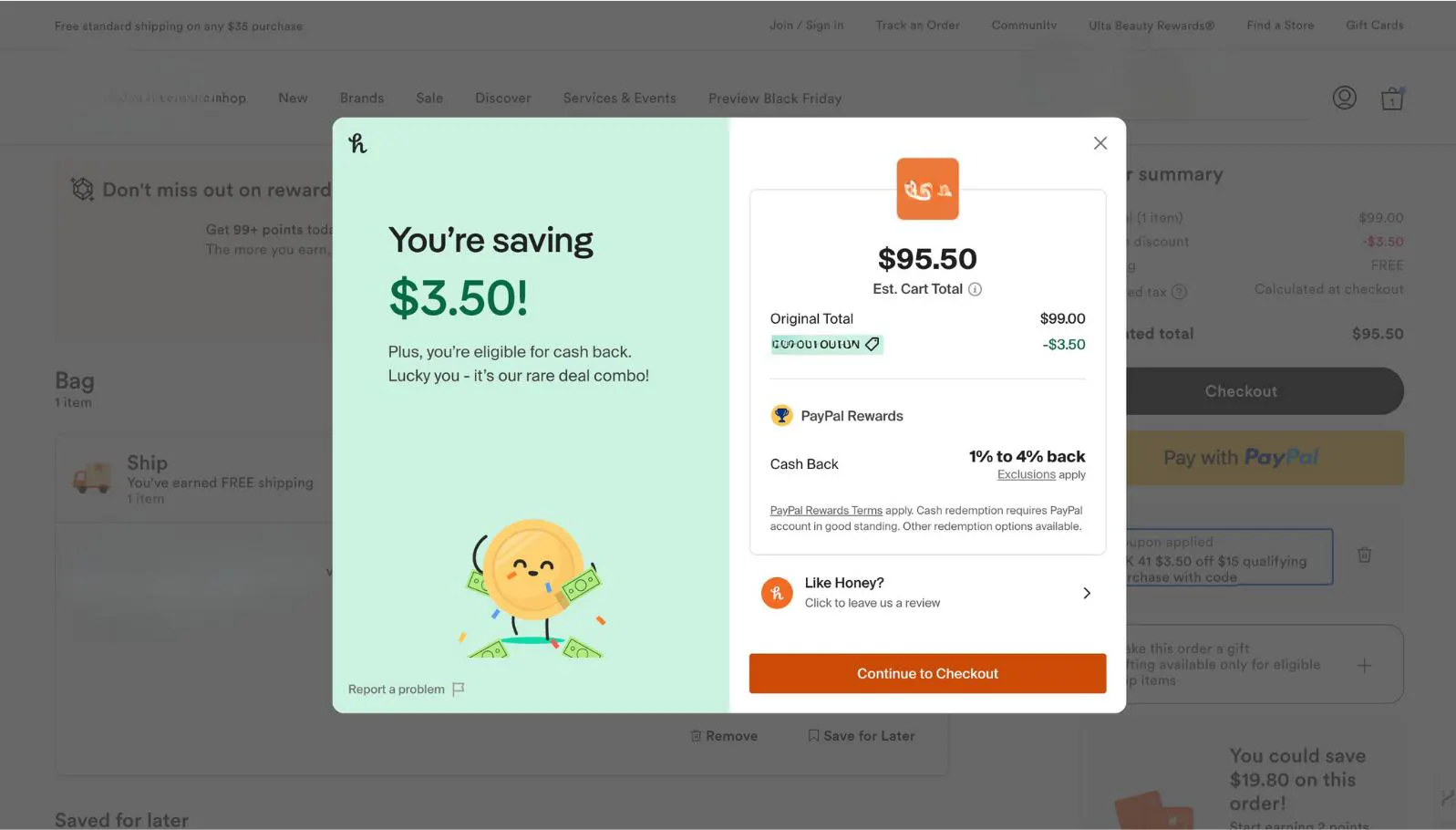
Coupon extensions can test multiple codes and apply discounts right on the checkout page.
3.2. Chrome Web Store policy since March 2025
On March 11, 2025, Google announced an update to the Affiliate Ads policy for extensions on the Chrome Web Store. An extension may add, edit, or replace affiliate links, codes, and cookies only when it meets three conditions:
Disclose the affiliate program on the Chrome Web Store page, in the interface, and before the user installs it.
Provide a direct benefit tied to the extension's core functionality, such as a discount or cashback.
Require an appropriate user action before applying it.
Inserting links on its own or updating cookies in the background without the user's knowledge may violate the policy. Google also gives the example that a coupon extension must not inject an affiliate link if it doesn't find a suitable code. The policy has been enforced since June 10, 2025. Source: Chrome for Developers.
As an affiliate, you should check the extensions you have enabled and the tools integrated into your website. Awin also has a stand down rule in certain cases where the user has already come from another Awin affiliate, in order to limit extensions interfering to win the commission.
4. How do networks and merchants detect cookie stuffing?
Networks and merchants can cross-check cookie creation time, the gap between click and purchase, the referrer, and traffic quality. The signals below may prompt them to conduct further review, but they are not sufficient evidence to conclude fraud.
Signal | What the network looks at | Possible innocent explanation |
Abnormal conversion rate | A conversion rate out of proportion to the number of clicks | Traffic comes from a customer group with high purchase intent |
Delay from click to purchase | The time between the click and the transaction | Users save the link and return to buy later |
Referrer is a redirect page | The original content page isn't clearly shown | A shortened link or an intermediate page from the network |
Low-quality website with large traffic | Traffic out of proportion to the website's content | A short-term campaign or external distribution source |
Traffic and device activity | Traffic, device, and browser fingerprint data | Many users with similar device environments |
Conversions rise but traffic doesn't | Transactions increase abnormally compared with visits | A campaign that attracts few people but with high purchase intent |
Note: This table is compiled from materials by Chargebacks911, SEON, Digiday, and Anura. The innocent explanations are possibilities that need to be cross-checked, not independently verified results.
Networks need to place these signals in the context of the traffic source, the promoted content, and the program's policies before drawing a conclusion.
Read more: Bot Detection Techniques: How do websites detect bots?
5. Is cookie stuffing illegal?
In the United States, cookie stuffing has been prosecuted as wire fraud. Brian Dunning, an eBay affiliate, pleaded guilty in 2013 and was sentenced to 15 months in federal prison in 2014.
According to the U.S. Department of Justice, Dunning used a free application on websites to make visitors' browsers receive eBay affiliate cookies even though they never clicked an ad or link. His company received about $5.2 million in commissions during 2006–2007; the agreed fraud amount was $200,000–$400,000. Source: U.S. Department of Justice.
Beyond legal liability, affiliates may have their commissions voided or their accounts terminated for violating a network's policies. For example, AvantLink strictly prohibits forced clicks and cookie stuffing, and Commission Factory also defines cookie stuffing as unacceptable behavior on its platform. The specific rules and penalties may differ between networks and individual affiliate programs.
6. How can you tell whether your website and links are unintentionally placing silent cookies?
You can test your website in a clean browser environment with no extensions and no old cookies. Then, monitor the cookies and requests that appear before you click the affiliate link. If a cookie related to the merchant appears early, that is a sign worth investigating further, but it isn't enough to conclude that the website is doing cookie stuffing.
6.1. Self-check process for your website and affiliate links
You can use the DevTools built into your browser to observe the cookies and requests generated when you visit your website.
Prepare a clean environment: Open a new profile, turn off unnecessary extensions, and clear old cookies for the relevant website.
Visit the website: Open the page you want to test, but don't click any affiliate link, ad, or popup yet.
Monitor requests: Press F12, open the Application tab to view Cookies and the Network tab to monitor requests to the network's or merchant's domain.
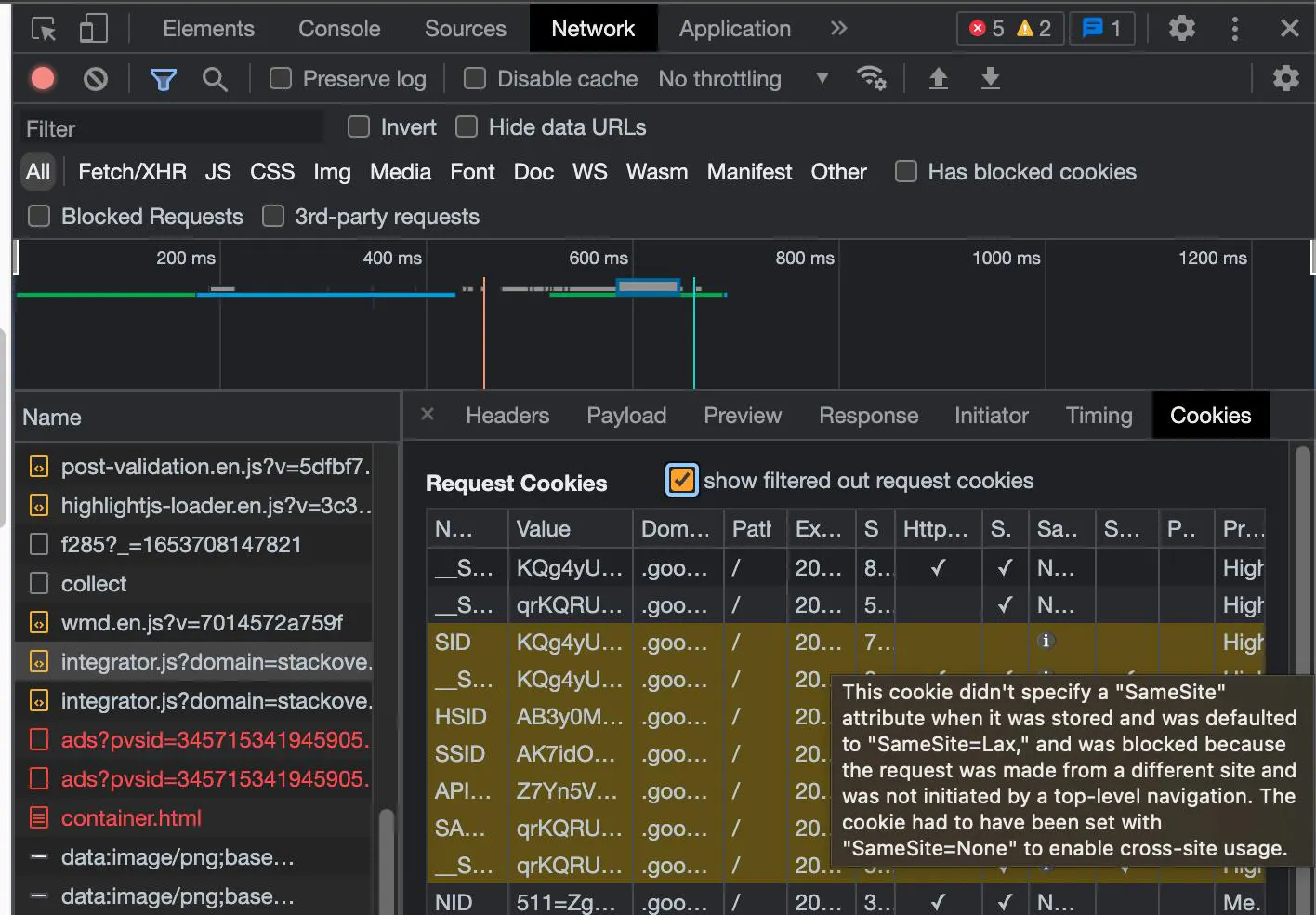
The Network tab helps you inspect requests and the cookies sent with them.
Compare before and after the click: Note the cookies present before any action, then actively click the affiliate link and check what changes.
Check third-party components: Repeat the test on pages with popups, widgets, ads, or embedded content to identify the source that creates the request.
Pay attention to the domain, cookie name, time of appearance, and the Initiator column in Network. This information helps you identify the component that initiates the request.
A cookie appearing before the link is clicked isn't enough to conclude fraud. It may be left over from an old session or created by a third-party component. DevTools only shows activity on the browser side and does not confirm how the network records commissions on its servers. If the cause is unclear, save the data and ask the network to verify.
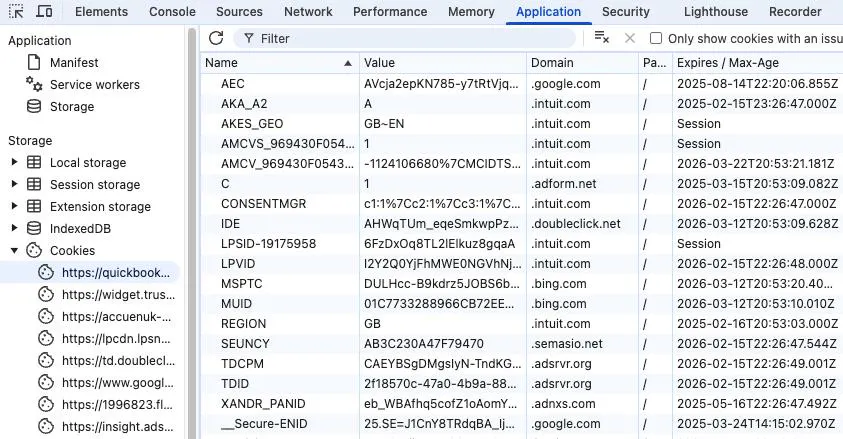
Chrome DevTools lets you view the cookies currently stored in the browser.
6.2. What should you do if the network withholds commissions or locks your account?
When you receive a review notice, you should clarify the reason before changing your website or submitting an appeal:
Read the email to identify the suspected behavior, the program, and the relevant time period.
Ask the network for more information about the flagged clicks, transactions, or time period if the notice isn't detailed enough.
Check your website, extensions, and third-party components to find the source of the abnormal requests.
Submit an explanation with analytics data, DevTools screenshots, and a description of your traffic sources.
Follow the response and provide additional information when the network requests it.
You should not create a new account or use a different environment to return to the network without permission. This may be seen as a continued violation of the terms and affect the appeal process.
6.3. How does Hidemyacc help in the checking process?
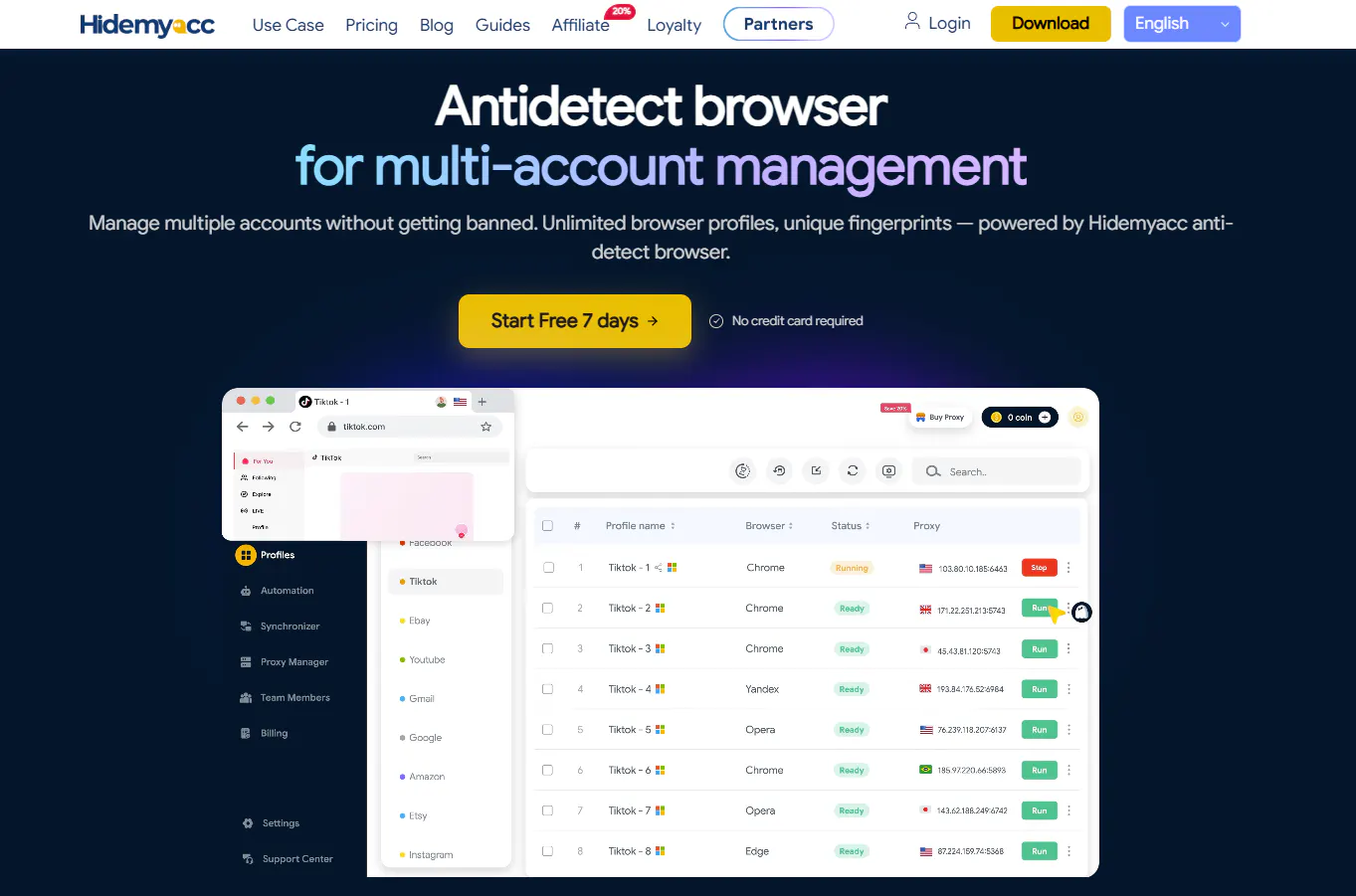
Antidetect browser Hidemyacc lets you create separate browser profiles, each with its own cookie data and independent browsing environment. You can use a new profile with no extensions installed to test affiliate links without being affected by cookies from your everyday browsing sessions.
However, a clean profile only helps you check the access environment; it does not determine how the network records commissions or assesses fraud. You still need to identify and deal with the source of unwanted requests, while complying with the affiliate program's terms.
Learn more: What is an antidetect browser? Why it's stronger than VPNs & proxies
7. Conclusion
Cookie stuffing is the act of placing an affiliate cookie before the user has actively clicked a referral link, so that a commission may be credited to an affiliate who didn't actually bring the customer to the merchant. However, an unusual cookie isn't enough to conclude there is fraud, because popups, extensions, plugins, or third-party widgets can also create unexpected requests.
To reduce the risk, you should regularly check your website, affiliate links, and the tools you use. When you receive a review notice from a network, identify the source, save the relevant data, and provide evidence in your explanation. Complying with affiliate policies and checking your tracking periodically will help you protect your account and your commissions.
Related articles:
Top affiliate marketing tools - Boost sales and optimize conversions
8. FAQ
1. Is cookie stuffing illegal?
It depends on each country's laws and the specific circumstances. In the United States, cookie stuffing has been part of a wire fraud prosecution. Beyond legal rules, you also need to comply with the terms of the network you participate in.
2. Are stuffed cookies related to cookie stuffing?
No. Stuffed cookies are baked cookies with a filling, while cookie stuffing is an affiliate fraud tactic that involves placing tracking cookies in a browser.
3. Are cookie stuffing and cookie dropping the same thing?
Many sources use cookie stuffing and cookie dropping as two names for the same behavior. However, classifications can differ between networks, so you should check the definition in the policy of the platform you use.
4. Can an affiliate who does everything right be wrongly flagged for cookie stuffing?
It can happen that a third-party tool, an extension, or an old component on a website creates unexpected cookies or requests. When you receive a review notice, you should check the source, save your evidence, and contact the network to verify instead of drawing your own conclusion from a single unusual cookie.