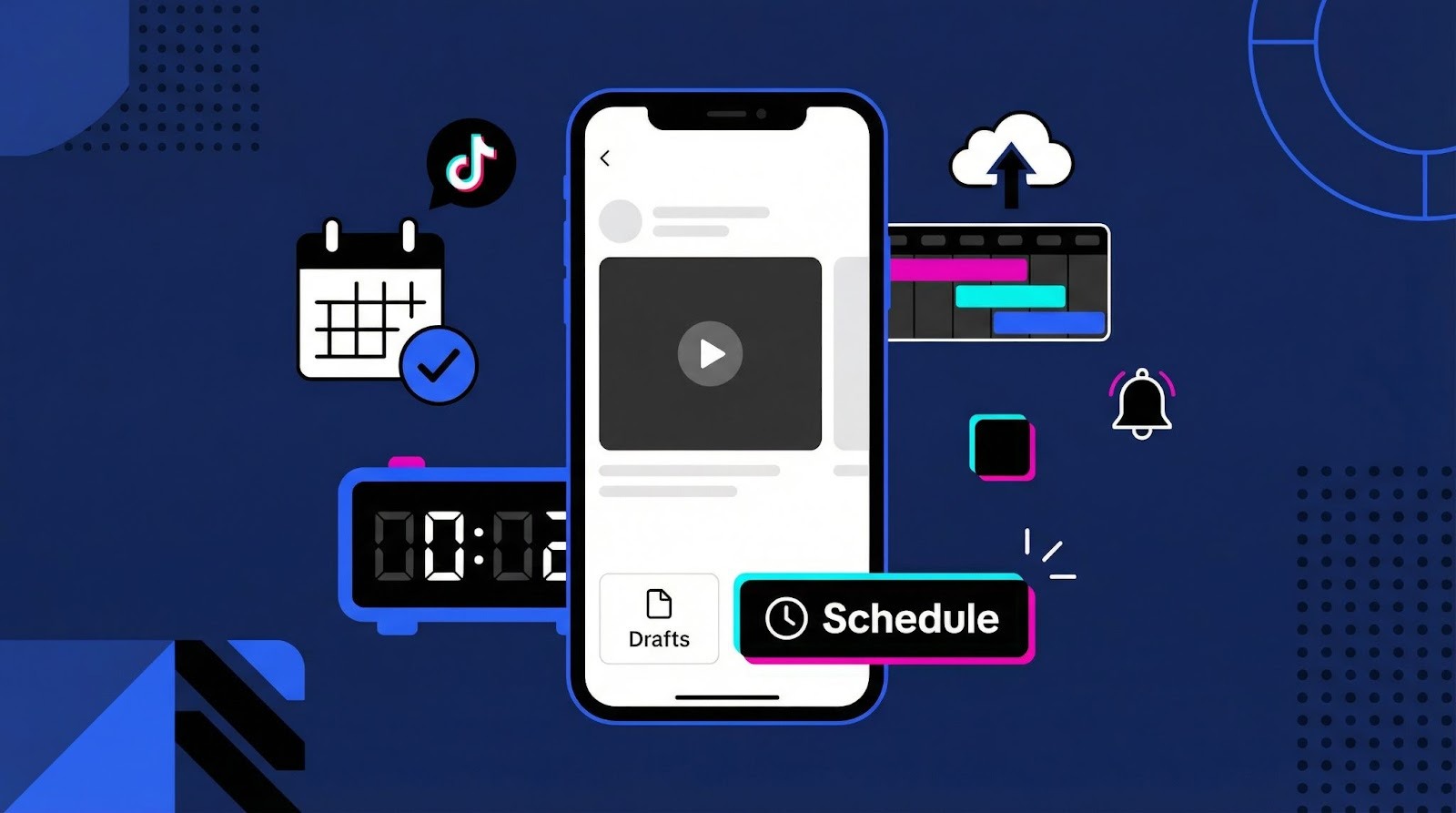
Scheduling posts has become a normal part of how many creators and social media managers use TikTok, but questions remain about how it may influence performance. One concern appears again and again: does scheduling a post on TikTok affect views, especially when compared to posting manually inside the app.
In this article, Hidemyacc will walk you through how scheduling works on TikTok, why some accounts see different results, and what factors actually matter when it comes to reach and visibility, helping you choose a posting method that fits your workflow with more clarity and confidence.
1. Does scheduling a post on TikTok affect views?
No, scheduling a post on TikTok does not directly reduce views by itself. TikTok does not officially state that scheduled posts are penalized or shown to fewer people simply because they are scheduled rather than posted manually.
However, scheduling can indirectly affect views when it changes how a video performs in its first moments after going live. TikTok relies heavily on early signals such as watch time, completion rate, and quick interactions to decide how widely a video should be distributed. If a scheduled post goes live at a time when fewer viewers are active or when a trend has already peaked, those early signals may be weaker.
The method used to schedule also matters. Posts scheduled through TikTok’s native tools tend to behave more like manually posted content, while third-party schedulers may limit access to certain features, such as trending audio or real-time interaction. These limitations do not guarantee lower views, but they can influence performance in some cases.
In short, scheduling itself is not harmful, but the surrounding factors, timing, content type, and early engagement, determine whether a scheduled post performs as well as a manually published one.
>>> Learn about:
- How to get more views on TikTok for FREE? 15 Tips That Work
- What are the best times to post on TikTok? A data-backed guide
2. Why many creators believe scheduling hurts reach
The idea that scheduling hurts reach did not appear out of nowhere. It comes from patterns creators notice over time, especially when they compare scheduled posts with videos published manually in the app. When the same account, content style, and posting time produce different results, it is natural to assume the posting method is the cause.
- Slower early engagement: Scheduled posts sometimes receive fewer views and interactions in the first minutes, which can affect how widely TikTok distributes the video.
- Missed trend timing: Trends on TikTok move fast, and content scheduled too far ahead may go live after a sound or format has already peaked.
- Less immediate in-app activity: Manual posting often comes with instant actions like replying to comments or staying active in the app, which scheduled posts may lack.
- Inconsistent results across posts: When similar videos perform differently, creators often link lower views to scheduling, even when other factors are involved.
- Limited features with some schedulers: Certain scheduling tools restrict access to trending audio or real-time options, which can influence performance.
Together, these experiences create a strong perception that scheduling hurts reach. In reality, what creators are reacting to is not the schedule itself, but how scheduling changes timing, interaction, and early momentum.
3. How the TikTok algorithm actually distributes videos
When a video is published on TikTok, it is not immediately shown to a large audience. Instead, the platform uses a step-by-step distribution process designed to test how viewers respond before deciding how far the content should travel.
At the beginning, a new video is shown to a small group of users who are likely to be interested based on past behavior. TikTok then closely observes how this group interacts with the content. These early reactions help the algorithm decide whether the video should be pushed to a wider audience or slowed down.
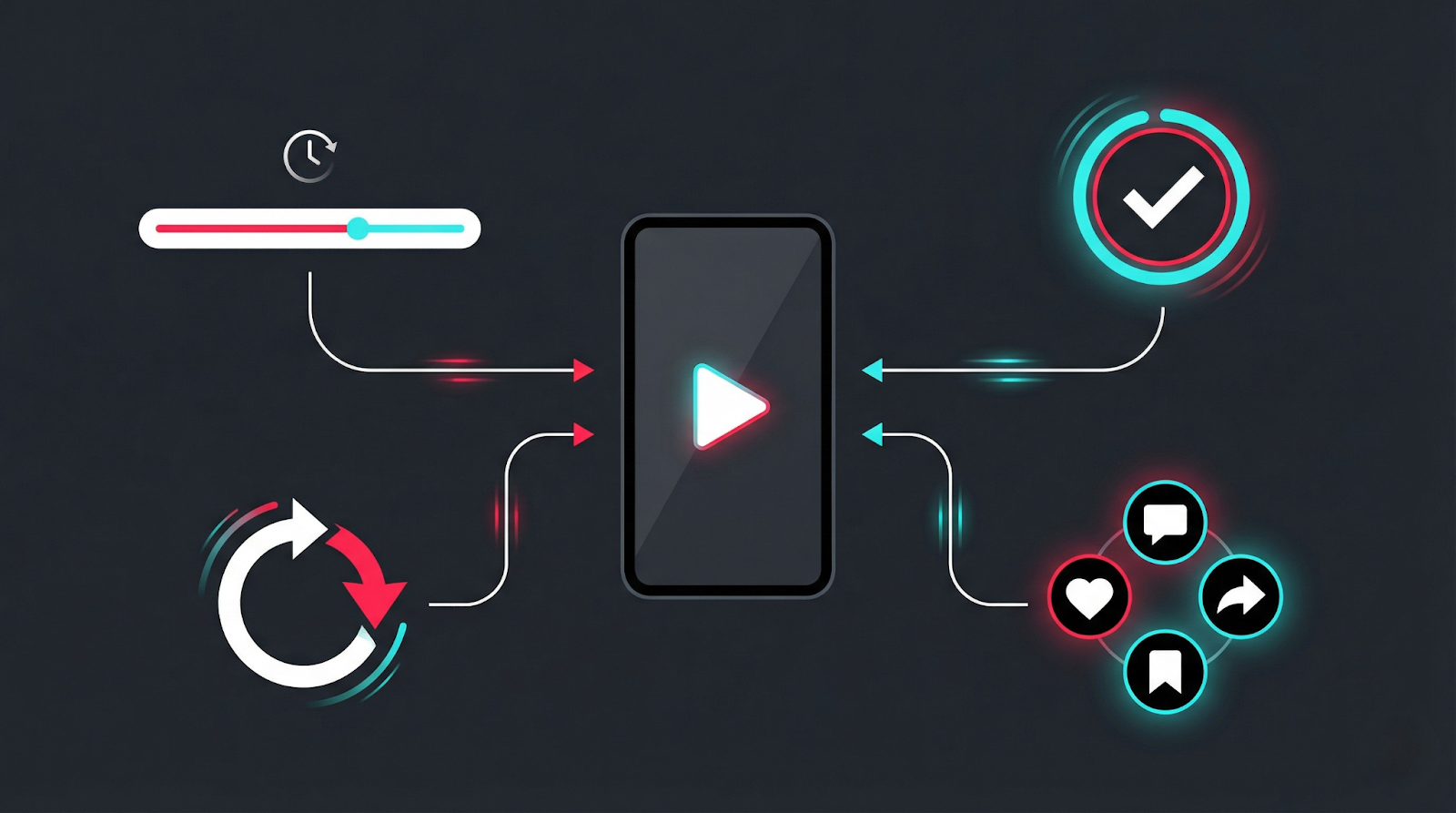
Several signals matter most during this early phase:
- Watch time: How long viewers stay on the video and whether they watch it to the end.
- Completion rate: The percentage of viewers who finish the video.
- Replays: Whether viewers choose to watch the video more than once.
- Engagement actions: Likes, comments, shares, and saves in the first minutes.
Timing plays an important role here, but it is often misunderstood. Posting at the “right time” does not guarantee success, and posting at the “wrong time” does not automatically limit reach. What matters more is whether enough active users are available to generate meaningful engagement shortly after the video goes live.
This is where scheduling can feel risky. If a scheduled post goes live when your audience is less active, early engagement may be weaker, even if the content itself is strong. In contrast, manual posting often happens when creators are online and ready to interact, which can support early signals.
>>> TikTok tips for engagement: How to boost your TikTok performance?
4. Scheduled vs Manual posting: What’s actually different?
At a high level, scheduled and manual posting can perform similarly. The real differences depend on timing, flexibility, and how actively the creator engages when the post goes live.
|
Aspect |
Scheduled Posting |
Manual Posting |
|
Publishing method |
Automatically published at a chosen time |
Published directly by the creator |
|
Creator presence |
Can be present or absent at publish time |
Can be present or absent at publish time |
|
Early engagement |
Strong if creator is active when the post goes live |
Strong if creator stays active after posting |
|
Trend relevance |
Stable for short-term scheduling (1–3 days) |
Naturally aligned with current trends |
|
Audio flexibility |
Fixed once scheduled |
Can be adjusted right before posting |
|
Timing control |
Precise, planned in advance |
Flexible, decided in the moment |
|
Risk level |
Depends on timing and follow-up behavior |
Depends on timing and follow-up behavior |
|
Best use case |
Planned content, consistent workflows |
Reactive content, fast trend response |
Scheduled posts are not weaker by default. Performance differences come from how scheduling is used, how close the publish time is to the trend cycle, and whether the creator is active when the video goes live.
5. Native TikTok scheduler vs Third-party tools
TikTok allows creators to schedule posts using its built-in tools or through third-party platforms. Both options are widely used, and neither is officially described as harmful to reach. The differences mainly relate to workflow, flexibility, and how content is managed at scale.
- Level of integration: TikTok’s native scheduler works directly inside the app, while third-party tools connect through external systems and APIs.
- Account management: Native scheduling is designed for single-account use, whereas third-party tools are often built to support multiple TikTok accounts in one place.
- Content preparation: With TikTok’s scheduler, videos are prepared and uploaded inside the app. Third-party tools usually involve preparing content outside TikTok before publishing.
- Scheduling flexibility: Native scheduling offers basic date and time control, while third-party platforms often provide calendars, queues, and bulk scheduling features.
- Team workflows: TikTok’s built-in tools are limited for collaboration, while third-party tools commonly support team access and shared workflows.
- Cross-platform planning: Native scheduling focuses only on TikTok, while third-party tools are often used to coordinate posting across multiple social platforms.
- Impact on views: Any difference in performance typically comes from timing, content relevance, and follow-up engagement, not from whether a native or third-party scheduler is used.
These points highlight that the choice between native scheduling and third-party tools is mostly about how you organize and manage content, rather than about direct effects on TikTok views.
6. Managing multiple TikTok accounts safely with Hidemyacc
When managing multiple social media accounts like Tiktok, the main challenge is not how often content is posted, but how those accounts are accessed and maintained. Repeated logins, shared browser data, and mixed environments can increase the risk of temporary restrictions, security checks, or account suspensions over time. These issues make multi-account management more complicated than it needs to be, especially when several accounts are handled from the same device.
Antidetect browser Hidemyacc is designed for this exact situation.
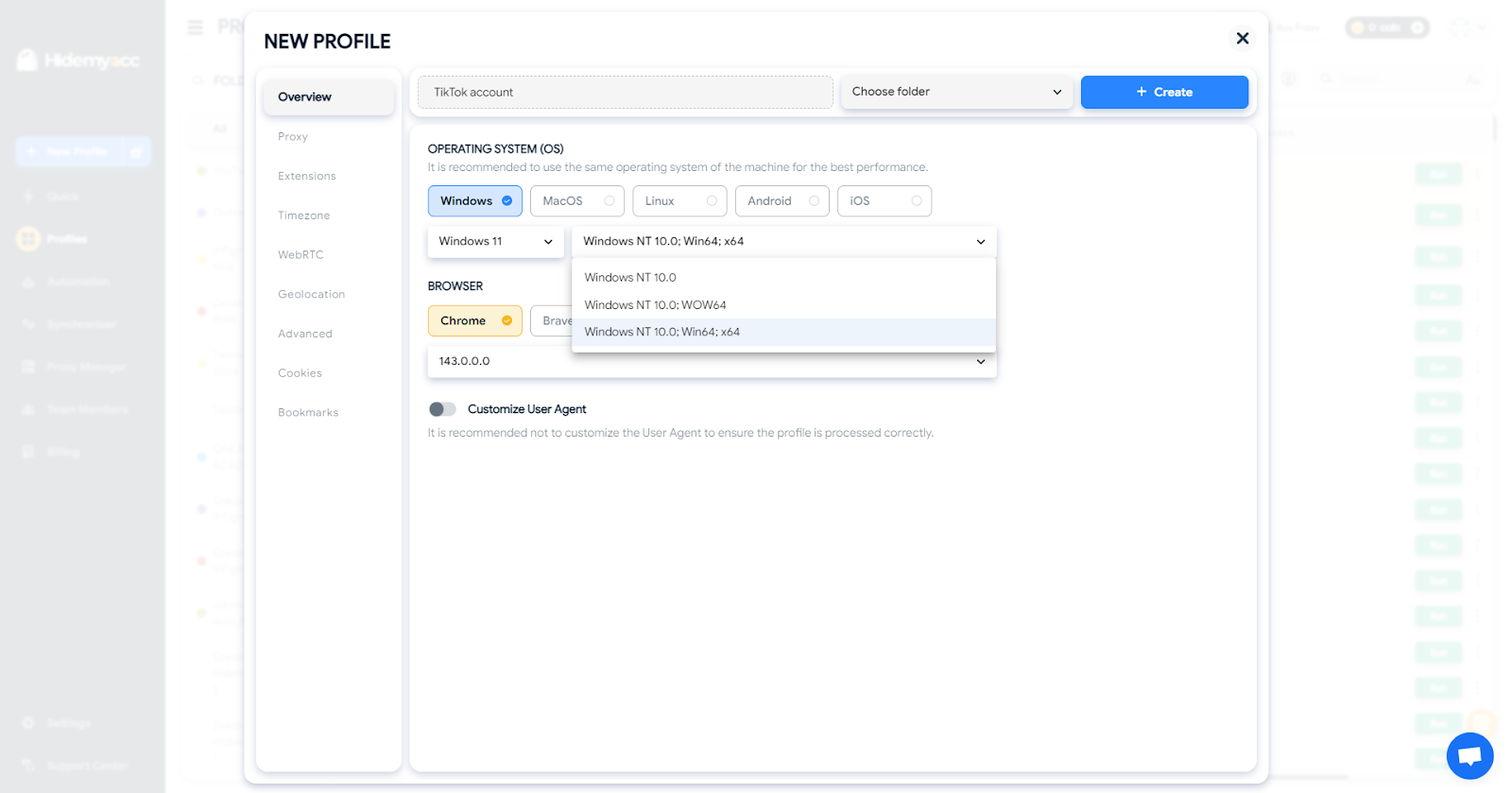
- Each TikTok account runs in its own isolated browser profile: Cookies, local storage, and browser fingerprints are kept separate, reducing overlap between accounts during daily use.
- Account identity stays consistent across sessions: Each account is accessed from the same environment every time, avoiding constant login switching and shared browser states.
- Managing multiple accounts becomes more practical: Multiple TikTok profiles can be handled side by side without relying on separate devices or repeated logins.
Using an antidetect browser like Hidemyacc helps make multiple TikTok accounts management safer and more efficient. When combined with planned posting, manual publishing, and engagement at the right time, it supports a workflow where account handling, scheduling, and content strategy work together, without turning any single tool into the deciding factor for views.
7. Best practices to schedule TikTok posts without killing reach
These best practices are based on recurring patterns observed by creators who tested scheduled and manual posting. They are not guarantees, but practical steps that help reduce common risks.
- Schedule only short-term: Scheduling one to three days ahead reduces timing errors. Long-term scheduling increases the chance that audience behavior or context has shifted.
- Plan engagement at publish time: Scheduled posts perform more consistently when creators are active shortly after publishing, rather than leaving posts unattended.
- Avoid using scheduling as a replacement for posting behavior: Scheduling works best as a planning tool, not as a fully automated process.
- Limit scheduling for trend-dependent content: Content that relies on fast-moving trends benefits from last-minute decisions rather than fixed schedules.
- Evaluate performance early, not late: Differences usually appear in the first hour. Monitoring only total daily views hides the real signals.
- Expect variability, not consistency: Scheduled posts may perform well or poorly depending on context. Mixed results are normal and should not be treated as proof of penalty.
When used this way, scheduling supports consistency without becoming the factor that decides whether a video gets reached or not.
>>> How to check for a TikTok shadowban and fix it fast
8. Conclusion
So, does scheduling a post on TikTok affect views? On its own, no. Scheduling is not a factor TikTok uses to judge content. What usually influences reach is how scheduling fits into timing, engagement, and day-to-day account behavior.
For creators handling multiple accounts, antidetect browser Hidemyacc helps keep account access consistent and reduce unnecessary risks when managing several profiles at once. That stability makes it easier to plan content, schedule posts, and evaluate performance without mixing signals between accounts.
In the end, scheduling works best when it supports a clear workflow, where content quality, audience timing, and active engagement remain the priorities, regardless of how or when a post is published.
9. FAQ
1. Does scheduling TikTok posts affect views?
No, scheduling itself does not reduce views; results depend on timing and early engagement.
2. Is it good to schedule posts on TikTok?
Yes, scheduling is useful for consistency when paired with active engagement after posting.
3. Why do scheduled videos get less views?
They often miss early interaction if no one engages when the video goes live.
4. Does scheduling a post affect engagement?
Only indirectly, if scheduling leads to weaker activity in the first minutes.
5. Does posting from drafts get less views?
No, drafts posted manually are treated the same as regular manual posts.
6. Can posting too much on TikTok get you shadowbanned?
There is no confirmed shadowban, but frequent low-quality posts can reduce reach.
7. When is the best time to post on TikTok to get views?
When your own audience is most active, not based on generic time charts.
8. Why does every TikTok I post get 0 views?
Common reasons include new accounts, guideline issues, repeated uploads, or very weak early engagement.