What is eBay VeRO list? This is the Verified Rights Owner Program that allows intellectual property owners to request eBay to remove listings that violate trademarks, copyrights, or patents. This causes many sellers to be reported even if their products are genuine. In this article, Hidemyacc will help you understand what is eBay VeRO list, how to look up the VeRO list, common violations, and how to avoid listing removals when selling on eBay.
1. What is eBay VeRO?
eBay VeRO stands for the Verified Rights Owner Program, a program implemented by eBay to help intellectual property owners protect their brands and products on the platform.
Through this program, companies or individuals who legally own rights to a brand, product, or content can request eBay to take down violating listings. The types of intellectual property protected by VeRO include:
- Trademark: Brand names, logos, or identifying marks
- Copyright: Images, descriptive content, promotional materials
- Patent: Patented technologies or products
- Design rights: Protects product designs, especially common in fashion and industry.
These rights help brands control how their products appear on eBay, thereby limiting counterfeits and protecting brand image.
The goals of the VeRO program are:
- Prevent rampant counterfeit and fake goods in the market.
- Protect brand owners rights against intellectual property infringement.
- Maintain a safe trading environment on eBay for both buyers and sellers.
Mastering these goals will help you understand why eBay enforces such strict policies, thereby having the right business strategy from the beginning to protect your store.
2. What is the eBay VeRO list?
After clearly understanding what eBay VeRO is, sellers need to know about the VeRO list. This term refers to the collection of brands participating in this program. Brands on the list have the right to:
- Request eBay to remove violating listings without contacting the seller.
- Send direct warnings to sellers about violations.
- Report listings in bulk if widespread violations are detected.
- Restrict or completely ban the resale of their products on eBay.
Note: eBay does not publish a complete list. Most current lists are compiled by the community from practical experience, therefore they cannot accurately reflect the risk level entirely and are for reference only.
VeRO is not simply a list of restricted brands but also a factor that directly affects the entire business process on the platform, especially for beginners who just create an eBay account for selling and are unfamiliar with the policies.
3. How to look up and understand the official eBay VeRO list
Understanding the nature of what eBay VeRO list is is the first stepping stone, but to truly protect the store, sellers need to master the skill of self-checking brands. Proactively reviewing before listing helps you avoid unexpected reports. You should perform the inspection process following these specific steps:
Step 1: Access the official VeRO directory
Sellers access eBays intellectual property management page at:
https://www.ebay.com/sellercenter/resources/verified-rights-owner-profiles
This is where profiles of registered brands are stored and their platform regulations are made public.
Step 2: Use quick search tools
Because eBays list is arranged alphabetically from A to Z and is very long, instead of scrolling manually and wasting time, you should take advantage of supporting shortcuts.
- Use the shortcut Ctrl + F on Windows or Cmd + F on Mac.
- Type the brand name you need to check into the browsers search bar.
- Check different name variations of the same company.
This operation helps avoid missing brands with different spellings, ensuring no important information is overlooked.
Step 3: Analyze the brands policy page
If the brand is on the list, click the link to read the details. This is the most important step to determine permitted rights. Pay attention to the following content:
- Contact Information: Contact details of the rights owner for sellers to reach out when needing to appeal or discuss.
- Prohibited Content: If there are rules against using the brand without permission, this means the company controls it very strictly.
- Authorized Retailers: This rule means the brand only allows official dealers to sell on eBay. Reselling or dropshipping activities will face a very high risk of being reported.
Carefully analyzing these regulations helps sellers clearly define operational boundaries, thereby optimizing listings without infringing on the owners rights.
Step 4: Note the limitations of the official list
Sellers should not trust this list absolutely due to objective limitations from eBays management system:
- Slow updates: Some new brands start scanning for VeRO but eBay has not updated the system yet.
- Hidden lists: Many companies still report violations even if they do not register a public profile on eBays VeRO page.
- Lack of risk categorization: This list merely lists names, without showing the frequency or strictness of violation scanning for each brand.
Fully performing the above search steps may take a little extra time during product preparation, but this is essential to protect the effort of building your store.
4. Most common VeRO violations
Even when sellers have conducted searches, mistakes during content editing can still lead to report risks. Below is a summary of typical error groups that eBays scanning system often focuses on handling:
4.1. Image and content copyright violations
Using unauthorized visual materials is the most common error, often arising from the habit of copying images from official sources to save time. Specific behaviors sellers need to avoid include:
- Taking product photos directly from the brands website or major e-commerce sites.
- Copying verbatim the manufacturers product descriptions into your own introductions.
- Using marketing materials, promotional videos, or comparison charts owned by the brand without consent.
Even if the product you are selling is completely authentic, using these copyrighted contents can still cause the listing to be removed immediately for infringing the brands image control rights.
4.2. Falling into trademark keyword traps
Besides the main brand name, sellers need to pay special attention to product description keywords that are already protected by intellectual property rights. Using these words as generic nouns to describe products causes many unexpected violation reports:
|
Keyword |
Owner |
Common Error |
Correct Usage (Alternative) |
|
Velcro |
Velcro Companies |
Used to describe hook-and-loop fasteners in general. |
Hook and loop |
|
Onesie |
Gerber |
Used to describe baby clothes. |
Bodysuit or Jumpsuit |
|
Kevlar |
DuPont |
Used to describe cut-resistant materials. |
Made with Kevlar (Must clearly state origin) |
|
Aviator |
Ray-Ban |
Used to describe pilot-style sunglasses. |
Pilot style sunglasses |
|
Ziploc |
S.C. Johnson & Son |
Used to describe zipper bags, plastic bags. |
Resealable bags or Storage bags |
|
Post-it |
3M |
Used to describe sticky notes. |
Sticky notes |
|
Tupperware |
Tupperware Brands |
Used to describe plastic food containers. |
Food storage containers |
|
Frisbee |
Wham-O |
Used to describe flying disc toys. |
Flying disc |
|
Band-Aid |
Johnson & Johnson |
Used to describe adhesive bandages. |
Adhesive bandages |
|
ChapStick |
GSK/Haleon |
Used to describe lip balm. |
Lip balm |
These seemingly common keywords are the cause of many VeRO violations that sellers often do not realize.
To minimize risks from automated scanning algorithms, sellers should apply standard product naming rules.
Tips for writing safe titles
To avoid being flagged for brand abuse or misleading buyers, sellers should apply the formula: [Product Name/Function] + Fits or For + [Compatible Brand Name].
- Should use: Silicon Case Fits iPhone 15.
- Should not use: iPhone 15 Silicon Case (This writing style is easily scanned by the system as an authentic Apple product).
Using conjunctions like Fits or For helps clarify that the product is a compatible accessory, not manufactured by the brand itself, and should be combined with optimizing eBay SEO for safe and sustainable listings.
4.3. Abusing brand names in titles
Many sellers have the habit of inserting famous brand names into product titles to increase visibility in search results. However, the following behaviors are considered serious violations, for example:
- Using the phrase Nike style shoes to describe non-Nike shoes.
- Using the phrase Gucci inspired bag to promote a generic handbag.
eBays system considers this a behavior that confuses consumers and abuses brand reputation for unjustified profit.
4.4. Misrepresenting warranty policies
Another error sellers often make is advertising official warranties for resold products. In many cases, warranty rights are only for the original buyer from an authorized dealer and are non-transferable. Promising after-sales services that the brand does not support for resold goods is considered misrepresenting policies and can be reported immediately.
4.5. Other violations
Besides content and keyword errors, sellers also need to pay special attention to some serious behaviors that can lead to permanent account suspension:
- Selling counterfeit or replica goods of famous brands.
- Selling products that brands clearly state are not allowed for resale in any form.
- Parallel importing: The act of selling authentic products into a country or region where the rights owner has not granted official distribution licenses there.
Identifying and avoiding the above errors not only helps maintain a stable store but also affirms professionalism in business operations. This is an important foundation for sellers to avoid legal troubles from eBays VeRO system.
5. List of common brands in the eBay VeRO list
To help sellers easily identify and categorize risk levels when choosing product sources, Hidemyacc has compiled the industry groups with the highest violation reporting rates today. Below is a detailed classification table of brands that frequently appear in eBays monitoring system that sellers need to pay special attention to:
|
Industry Group |
VeRO Risk Level |
Typical Brand Examples |
Control Characteristics |
|
Technology and Electronics |
Very High |
Apple, Sony, Nintendo, Samsung |
Tech companies strongly protect product images, marketing content, and device designs. Listings using images or content from official websites are easily reported. |
|
Fashion and Luxury Accessories |
Very High |
Louis Vuitton, Gucci, Nike, Adidas, Puma, Ray-Ban |
Fashion is one of the sectors with the highest counterfeit rates, so brands constantly scan listings to detect violating products. |
|
Automotive and Car Accessories |
High |
Porsche, Harley Davidson, BMW, Mercedes-Benz |
Car manufacturers strictly control logos, accessory designs, and products related to their brands. |
|
Tools and Specialized Equipment |
High |
Snap-On, DeWalt, Milwaukee Tools |
Some professional tool brands protect their brands very strongly and often report listings using their images or content. |
|
Cosmetics and Healthcare |
Medium |
Nu Skin, Beachbody, Rodan + Fields |
Some companies control their distribution and reseller systems quite strictly, especially with healthcare products. |
|
General Products and Housewares |
Low |
Small or generic brands |
These industries usually only report when detecting clear counterfeits or serious violations. |
The control characteristics of each industry group are important information for sellers to optimize the listing process right from the start. However, sellers should note that this list is for reference only and the scanning strictness of brands can change flexibly over time.
6. How to identify brands at risk of being on the eBay VeRO list
In reality, there are many brands that do not register public profiles but still silently conduct rigorous copyright scans. To minimize risks, sellers need to identify danger signs through the following specific aspects:
6.1. Signs from products
In terms of goods, sellers can early identify copyright risks through specific visual characteristics:
- Products belonging to luxury, high-tech groups, or featuring copyrighted characters.
- Brand logos appearing prominently or densely on the product.
- Unusually low import prices compared to official retail prices.
Paying close attention to design details and prices helps sellers filter out sensitive items at first glance.
6.2. Signs from suppliers
Source reliability is a key factor in determining legality and minimizing the likelihood of violation reports:
-
Cannot provide purchase invoices or Letters of Authorization.
-
Suppliers are located in high-risk areas for counterfeit and replica goods.
Well-controlled source reputation is the most important stepping stone to ensure long-term legality for your entire store.
6.3. Signs from the market
Fluctuations in similar posts on the platform often reflect the attitude of rights owners towards small retailers:
- Listings from other sellers for the same product are constantly removed.
- The number of sellers for that item is very small or only large authorized stores are present.
Closely monitoring market movements helps sellers flexibly adjust business strategies to protect accounts timely.
Synthesizing these practical signs helps sellers form a set of product screening rules. This is a skill that helps maintain account stability amidst continuous changes in eBays intellectual property protection system.
7. Hidden corners and risks from brand owners
Although the VeRO program is designed to fight counterfeits and protect intellectual property, many small sellers believe this system sometimes creates certain risks.
- Policy abuse: Many companies currently use VeRO as a weapon to limit competitors, hinder the resale market, and force users to buy new goods directly from the brands distribution channels.
- Inaccurate automated scanning: Brands often hire third parties using automated scanning tools to review posts on a large scale, leading to many cases of mistaken reports causing sellers unjust damages while the appeal process is complex and success rates are extremely low.
Recognizing these hidden corners helps sellers not be too confused when encountering incidents, while being more proactive in finding suitable negotiation solutions to protect their legitimate rights.
8. Consequences and impacts of VeRO violations on your account
When a post is reported for a violation, the consequences do not stop at the product being deleted but also profoundly affect long-term business reputation and performance. Sellers need to anticipate the following impacts to take timely risk management measures for the store:
8.1. Immediate impacts from eBay
Immediately after receiving a request from the rights owner, the system will implement quick handling measures to prevent the infringement from continuing:
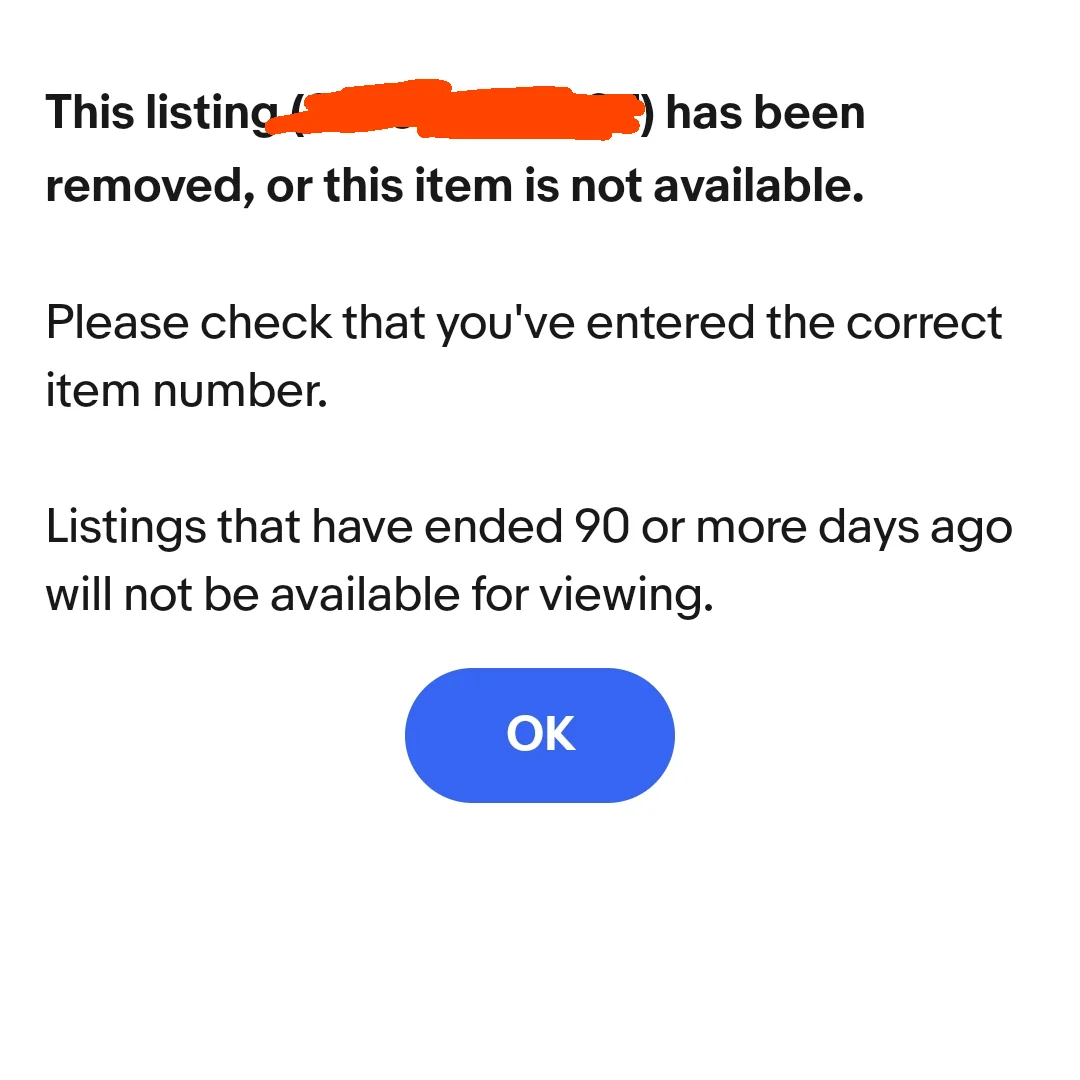
- Immediate listing removal: eBay will delete the reported product without prior notice.
- Violation notice sent: Sellers will receive an email explaining the removal reason along with the rights owners contact info to self-negotiate or appeal.
- Official warning: The account will have a recorded violation history, which is the basis for eBay to consider heavier penalties if repeated.
These immediate reactions require sellers to take immediate action to prevent the situation from becoming more serious for the business account.
8.2. Long-term impacts on account health
Besides direct penalties, the overall health and competitiveness of the store will significantly decline over time:
- Reduced visibility: eBays search algorithm often prioritizes clean accounts. When hitting a VeRO strike, remaining listings can be pushed to lower positions, leading to reduced traffic and sales.
- Selling limits restricted: Sellers may be restricted in the number of new products they can list or not be allowed to edit current listings for a certain period.
- Flagged and strictly monitored: The account will be on a special watchlist. All subsequent listing activities will be censored more strictly.
- Permanent account suspension: In cases of serious violations or multiple offenses after being warned, you can have a suspended eBay account permanently and face selling limits.
Understanding these consequences will help sellers raise compliance awareness and always prioritize protecting account safety in all business decisions.
9. 3-step process to handle and appeal when receiving a VeRO notice
If unfortunately receiving a violation notice, staying calm to handle it in order will help you minimize damages. Below is a 3-step roadmap to help sellers respond effectively and have a chance to restore account reputation:
Step 1: Comply and self-check
The first and most important action is to show respect for the platforms policies to avoid escalating penalties:
- Stop relisting immediately: Absolutely do not relist the just-removed listing. This is an intentional violation that easily leads to permanent account locking.
- Review the entire store: Check similar products or the same brand. If there are risks, proactively remove them before eBay scans them.
Proactiveness in self-checking will help sellers score points with eBay on awareness of complying with general community rules.
Step 2: Contact to negotiate and provide evidence
After stabilizing the store, sellers should try to dialogue directly with the reporting party to solve the root problem:
- Contact the rights owner: Use the email in the Contact Information section on the brands Policy page to explain the situation and express a constructive attitude.
- Request Retraction: Ask them to send a retraction notice to eBay to clear the strike on the account, in return the seller commits to permanently removing the product.
- Provide origin evidence: Attach documents to prove authentic goods if available, such as: purchase invoices, letters of authorization.
Successful negotiation not only helps clear penalties but also opens up opportunities for sellers to better understand the copyright boundaries of each brand.
Step 3: Submit an official appeal to eBay
In case negotiation efforts are unsuccessful but you have a full legal basis, submitting an appeal is the last option:
- Applicable cases: Only perform when the seller is absolutely certain they did not violate and has sufficient legal evidence.
- Take legal action: This is a process under the DMCA Act. If the appeal is successful, eBay will restore the listing and remove negative impacts on the account.
Note: If appealing falsely, sellers may face legal risks off-platform, so consider extremely carefully before taking this action.
10. How to avoid eBay VeRO violations when selling
Establishing proactive risk prevention measures is vital for everyone doing business on eBay. To build a sustainable store and minimize sudden post removals, sellers should apply account protection strategies systematically through the following aspects:
10.1. Check brands before listing
Before deciding to list any product, thoroughly researching the rights owner is a mandatory step to determine safe boundaries for the account. Sellers should form a strict inspection process as follows:
- Thoroughly research brand history and reputation on seller forums before deciding to import large quantities.
- Check if the brand belongs to the group that frequently reports sellers or has extremely strict protection policies through community lists.
Proactiveness in research helps sellers eliminate high-risk items right from the start, especially if you are looking for ecommerce business ideas with low risk suitable for beginners.
10.2. Optimize safe listings
Content presentation and images are deciding factors on whether your post falls into the sights of automated scanning tools. Sellers need to pay special attention to these optimization principles:
- Create your own actual images and write completely new product descriptions instead of copying materials from official brand websites.
- Avoid using brand names incorrectly in titles, instead use appropriate conjunctions to affirm product compatibility.
- Limit selling products with overly prominent or large brand logos if not officially permitted.
A unique post that properly complies with content rules not only avoids copyright errors but also increases trust for shopping customers. Besides, using Stealth eBay accounts is an effective risk distribution solution for professional sellers. Owning anonymous accounts helps you maintain stable business operations even if one account unfortunately gets a copyright strike.
10.3. Control product sources
Supply management and transparent legal documents are the most solid shields helping sellers pass eBay checks. Effective control measures include:
- Consider listing products as used goods to reduce strictness regarding distribution policies from brands.
- Use specialized product filtering software to automatically identify and eliminate item codes with high copyright risk signs.
- Always require suppliers to provide full purchase invoices or valid distribution authorization letters as evidence when needing to appeal.
Owning complete documents and applying smart product filtering technology is the core foundation to maintain a sustainable business on the volatile eBay platform.
11. Conclusion
eBay VeRO is one of the major risk factors that any seller needs to understand clearly when doing business on this platform. Knowing how VeRO works, identifying common errors, and proactively controlling product sources will help you minimize the risk of listing removal or account locking.
In the context of eBay tightening policies, sellers need to build a systematic checking and listing optimization process to develop stores sustainably.
12. FAQ
1. Does eBay publish an official eBay VeRO list?
No. eBay does not publish a complete eBay VeRO list for sellers. Instead, eBay only provides a directory of rights owners participating in the VeRO program. Therefore, many VeRO lists on the internet are compiled from seller community experience.
2. If the product is authentic, can it still be reported for VeRO?
Yes. Even if the product is real, the listing can still be reported if the seller violates intellectual property rights such as using copyrighted images, brand marketing content, or selling products outside the authorized distribution system.
3. Is getting a VeRO strike on eBay dangerous?
Yes. A single VeRO violation can cause a listing to be removed and the account to receive a warning. If violated multiple times, eBay can restrict selling privileges or even permanently suspend the account.
4. Can I appeal when reported for VeRO?
Yes. Sellers can directly contact the rights owner to request withdrawing the complaint or submit an official appeal to eBay if there is evidence proving the listing did not violate.
5. Should I completely avoid brands in the eBay VeRO list?
Not necessarily. However, sellers should be careful when listing products belonging to brands that frequently report VeRO. Researching brand policies and optimizing listings correctly will help significantly reduce risks.
6. How to know if a brand frequently reports VeRO?
Sellers can check through the brands VeRO profile page on eBay, consult eBay VeRO lists compiled by the seller community, or monitor whether listings of that product are frequently removed.