
Many Etsy sellers want to open additional shops when their business grows or they want to test different product niches. However, owning multiple shops also makes many people worry about the risk of account suspension if they violate platform policies. In reality, Etsy allows one person to manage multiple shops, but it comes with quite strict regulations.
Let's join Hidemyacc to find out if can you have multiple shops on etsy, the regulations to follow, how to create additional shops, and important notes when safely managing multiple shops.
1. Can you have multiple shops on Etsy?
Yes, Etsy allows one person to own and operate multiple shops on the platform. However, to avoid policy violations, sellers need to comply with some basic conditions. The most important thing is each shop must be created from a separate Etsy account and each account must use a different email address.
A notable point is that Etsy still allows multiple shops to share some financial and legal information. The data that can be shared includes:
- Bank account
- Payment card
- Tax information
- Business information
In short, sellers can absolutely operate multiple Etsy shops if each shop is created from a separate account and complies with the platform's regulations on transparency as well as financial information.
2. Official regulations when opening multiple shops on Etsy
Can you have multiple shops on etsy is a question that many sellers care about when wanting to expand their business on this platform. In reality, Etsy allows one person to own and operate multiple shops, but specific regulations must be followed.
- One email per shop rule: Etsy stipulates that each account can only create a single shop. Therefore, when you want to open an additional shop, you need to create a new account with a new email.
- Transparency requirements: Etsy requires sellers to declare related shops in their public profile. This helps buyers recognize that those shops share the same owner.
- Rule against duplicate shops: The platform strictly prohibits creating multiple shops just to sell the exact same type of products in order to occupy multiple positions in search results.
- Policy on legal and financial information: The platform allows the shared use of bank accounts, payment cards, tax codes, or business information. This saves sellers from needing to create separate financial systems for each shop.
- Rule on shop ownership: Etsy does not allow transferring shop ownership to another account or transferring review history to a new shop. Each shop must be operated by the account that created it.
These policies help ensure transparency and prevent search system manipulation. Therefore, when operating multiple shops on Etsy, sellers need to fully comply with regulations regarding accounts, ownership, and product distribution to avoid violations.
3. How to open an additional shop on Etsy
After understanding the regulations, sellers can start setting up a new shop. Below is the basic process to open an additional shop.
Step 1: Create a new Etsy account:
- Go to the Etsy homepage and log out of the current shop, or open Etsy using a different browser.If you want to create an additional account while keeping the login session of the current shop, sellers can use the antidetect browser Hidemyacc. This tool allows creating separate browser profiles, thereby each Etsy account can be created and used in an independent browser environment.
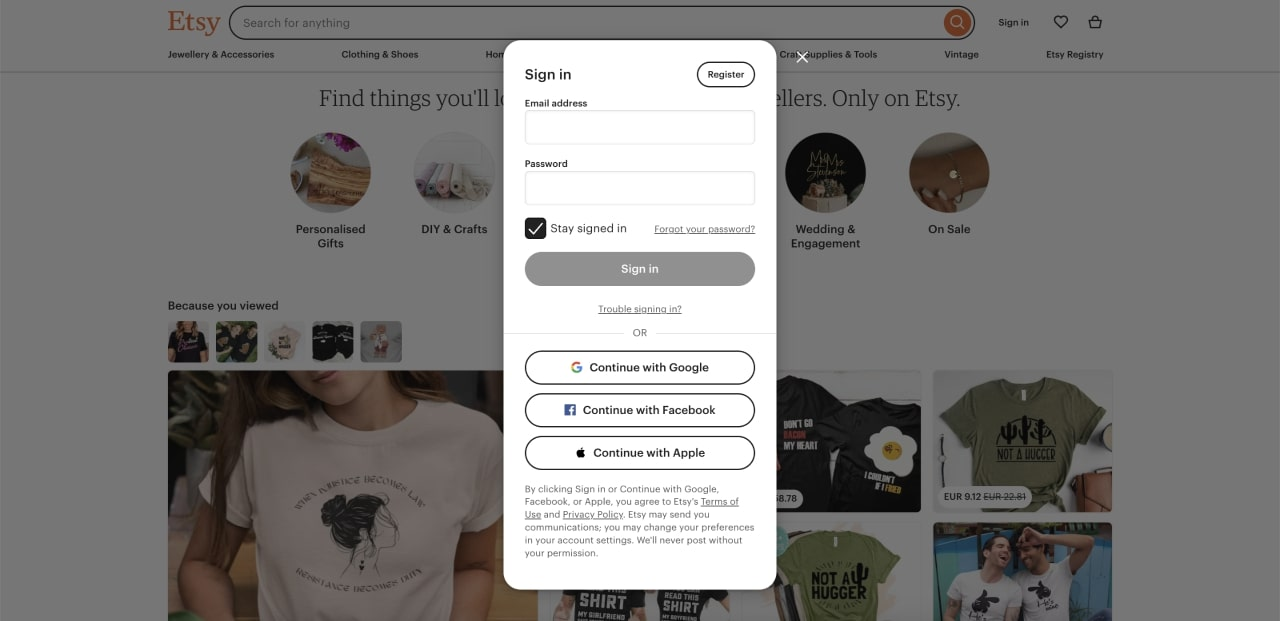
- Click on Sign in, then select Register.
-
Enter the new email address and complete the account registration process.
After registering, you can fill in your personal information in the Your Account settings section, or complete it after creating the shop.
Note: Etsy only allows each account to be associated with one shop, so it is mandatory to use a new email when you want to open an additional shop. Also, you should remember the login information of each account to avoid confusion when managing multiple shops.
Step 2: Verify email address
After registering a new account, Etsy will send a confirmation email to the email address you just used.
- Open your new email inbox.
- Find the confirmation email from Etsy.
- Click the verification link to activate the account.
You will not be able to continue creating a shop until you complete this email verification step.
If you encounter an error during the verification process, you can refer to the guide to verify your Etsy account to quickly handle common issues when activating an account.
Step 3: Create a seller account on Etsy:
After verifying the email, your new account is currently still a buyer account. To open a shop, you need to switch to a seller account.
- Click on the Your Account menu in the top right corner of the screen.
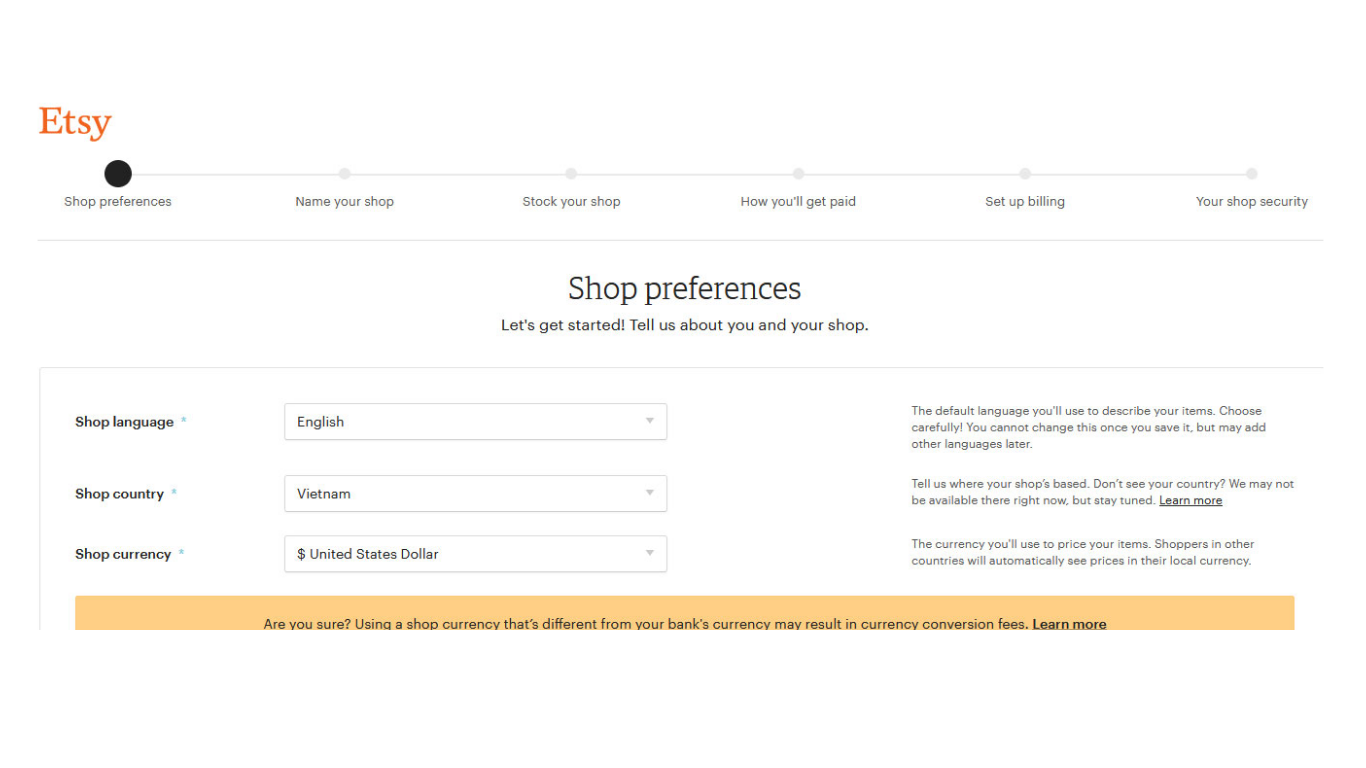
- Access the Sell on Etsy section and choose to create a new shop. Sellers will need to set up some basic information such as: shop name, operating country, shop language, currency used
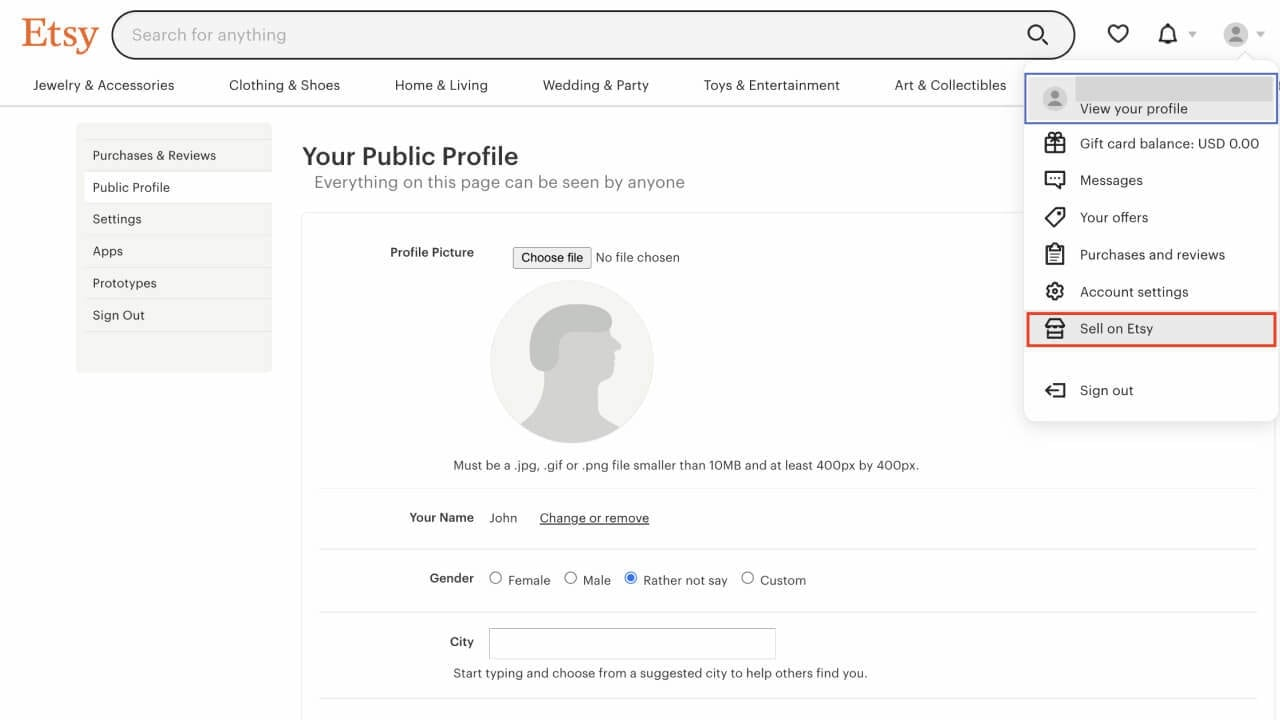
Note: The shop name on Etsy must be unique, so you should prepare several different name options in case your desired name is already used.
Step 4: List the first product: Etsy requires each shop to have at least one listing before opening the shop. Sellers need to upload product images, descriptions, selling prices, and shipping information.
Step 5: Set up payment information: Provide financial information to receive payments, including:
- Bank account
- Payment card
- Tax information (if any)
You can use the same bank account or payment card for multiple shops, because Etsy allows sharing financial data. Please double-check the bank and tax information to avoid errors when receiving payments later.
Step 6: Complete shop setup: After completing the above steps and listing the first product, the shop will be officially activated and can start receiving orders.
After completing the above steps, you can operate an additional new shop on Etsy. Setting up the correct process right from the beginning will make managing multiple shops easier and minimize arising risks.
4. When should and shouldn't you open additional shops on Etsy?
Although Etsy allows one person to own multiple shops, opening additional shops is not always the right choice. Before deciding to expand, sellers should carefully consider their business situation and product strategy.
4.1 When to open an additional shop
In some cases, opening an additional shop can help you optimize your business strategy and reach more customer groups. Below are common situations where sellers should consider creating an additional shop:
- Targeting a completely new customer niche with its own brand positioning.
- Wanting a clear separation between physical products, digital products or a separate shop to run a print on demand business model, avoiding confusion for customers.
- Need to optimize sales strategy for different geographical markets, such as creating separate shops for each market.
Generally, opening an additional shop makes sense when you have a clear difference in product or brand strategy between shops.
If you are still looking for product development direction for a new shop, refer to the ecommerce business ideas to discover popular sales models in the e-commerce field.
4.2 When not to open an additional shop
Conversely, in some situations, opening an additional shop can make the operation process more complex and consume more resources. You should carefully consider if you fall into the following cases:
- Products only have minor differences and can be categorized within the same shop.
- The current shop is not operating stably or does not have a steady revenue stream.
- You don't have enough time and resources to manage multiple shops simultaneously.
Therefore, before deciding to open an additional shop, sellers should carefully evaluate the current business situation to ensure that operating multiple shops is truly effective.
5. Pros and cons of opening multiple shops on Etsy
Owning multiple shops on Etsy can bring many development opportunities for sellers. However, besides the clear benefits, this model also comes with many challenges in the operation process.
5.1 Pros
When implemented correctly, opening multiple shops can help sellers expand their business operations and reach more customers. Some outstanding benefits include:
- Increase coverage and brand recognition on the Etsy platform.
- Reach many different target customer files through shops with specific positioning.
- Diversify revenue streams, avoiding dependence on a single product line.
- Disperse business risks, not completely dependent on one shop.
Thanks to these benefits, many sellers choose to develop a multi-shop system to scale their business on Etsy.
5.2 Cons
However, operating multiple shops also comes with some difficulties that sellers need to consider before expanding the system.
- The workload for SEO optimization and marketing increases significantly when having to manage multiple shops at once.
- Requires the ability to manage multiple accounts and a large number of products.
- Higher operating costs, including listing fees and advertising budgets.
- Collateral risk if one of the shops violates Etsy's policies.
Therefore, before opening an additional shop, sellers should carefully weigh the benefits and operating costs to choose a model suitable for their management capabilities.
6. How to manage multiple shops on Etsy effectively
When operating multiple shops simultaneously, managing accounts, orders, and products can become quite complex. Therefore, sellers should build a clear management system to ensure all shops operate stably and effectively. Below are some common ways to help manage multiple Etsy shops more easily:
- Use the Etsy Seller app: This app helps you receive notifications, reply to messages, and manage orders from multiple accounts more conveniently on your phone.
- Log in using different browsers: Use Chrome, Firefox, Edge… Set up separate user profiles on the web browser to keep independent login states, avoiding continuous log in and log out operations.In case you need to manage multiple accounts on the same device, sellers can also use the antidetect browser Hidemyacc to create isolated browser environments. Each profile acts as a separate device, helping to manage multiple Etsy shops more conveniently.
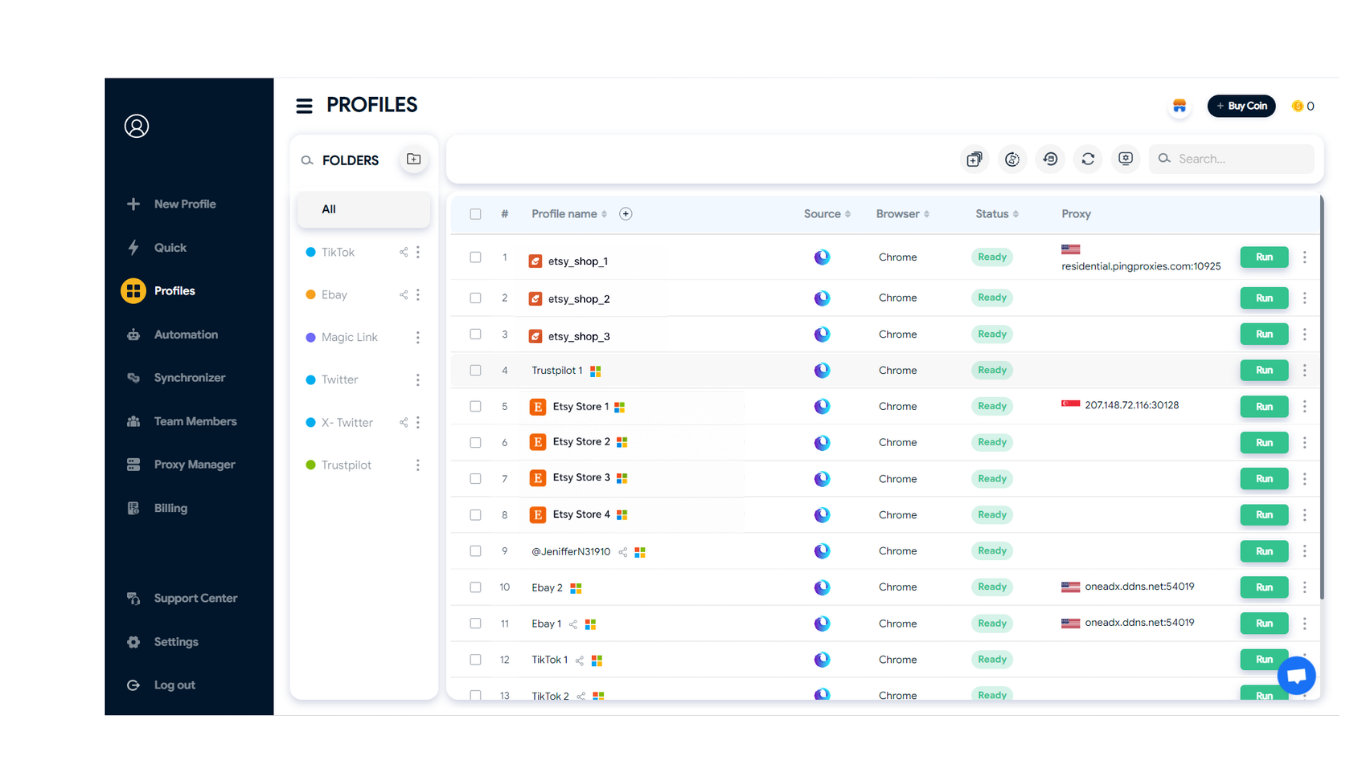
- Set up visual identification: Use different interface colors, set separate profile names and avatars for each shop to avoid confusion when processing messages or orders.
- Set up management process: When operating multiple shops, you should allocate time to process orders, messages, and update products for each shop to avoid confusion and omissions, and use Etsy buyer accounts to check the shopping experience or research competitors.
- Leverage the supporting tool ecosystem: Use seller apps to centrally manage messages and orders. Besides, you can combine tools like Printful, Printify, eRank or Marmalead (Etsy keyword research), Vela (bulk listing editor), Outfy (social media product promotion) or Putler (sales data analysis). Besides, you can also use automation tools for Etsy to optimize the operating process and grow multiple shops more effectively.
Overall, building a clear management system and leveraging supporting tools will help sellers operate multiple Etsy shops more effectively, while minimizing errors during the business process.
7. Common mistakes that cause the shop system to be suspended
Although Etsy allows a person to operate multiple shops, sellers can still face the risk of account suspension if they violate the platform's policies. Some common mistakes below can affect the entire shop system.
- Concealing information, not declaring related shops on the public profile as required by Etsy.
- Distributing almost identical products across shops causing the platform to consider this as duplicate shop creation behavior.
- Posting spam products to manipulate the platform's search system.
- Policy violation in one shop, such as copyright violation or product regulation, leading to the risk of affecting all related shops.
Therefore, when operating multiple shops on Etsy, sellers need to strictly adhere to the platform's policies to avoid the risk of suspension or account ban.
8. Conclusion
In conclusion, owning multiple shops on Etsy is completely valid if the seller properly complies with the platform's regulations. However, you should only expand when you have a product niche or brand positioning that is truly different to avoid duplication and management difficulties.
Besides, always ensure transparency between related shops and focus on product quality as well as customer experience. This is an important factor helping the multiple-shop system on Etsy to develop stably and sustainably.
9. FAQ
1. How many shops can a person open on Etsy maximum?
Etsy does not have a specific limit on the number, as long as each shop strictly follows the platform's regulations.
2. Do I need to use a different email for each Etsy shop?
Yes. Etsy requires each shop to be created from a separate account, so each account needs a different email address.
3. If one shop is suspended, will other Etsy shops be affected?
Yes. If a shop is suspended due to policy violations, Etsy may suspend all shops associated with the same owner.
4. Is it safe to share one company and bank account for multiple shops?
Yes, this is completely safe. Etsy allows multiple shops to share business, bank account, and tax information.
5. Can I list the same product on two different shops?
No. Etsy strictly prohibits duplicating shops or listing the exact same product on multiple shops of the same person.