Whether you're just starting out or have years of experience in the industry, you're probably wondering if dropshipping is still effective in 2026? As the e-commerce market stabilizes and consumers begin to tighten their spending, many believe this model is no longer as lucrative as it once was, or even outdated.
However, we are here to assert the opposite, and the data will prove it's not outdated at all. So, how can you break through in the current climate? If you're looking for the answer, this article is exactly what you need.
1. What is dropshipping?
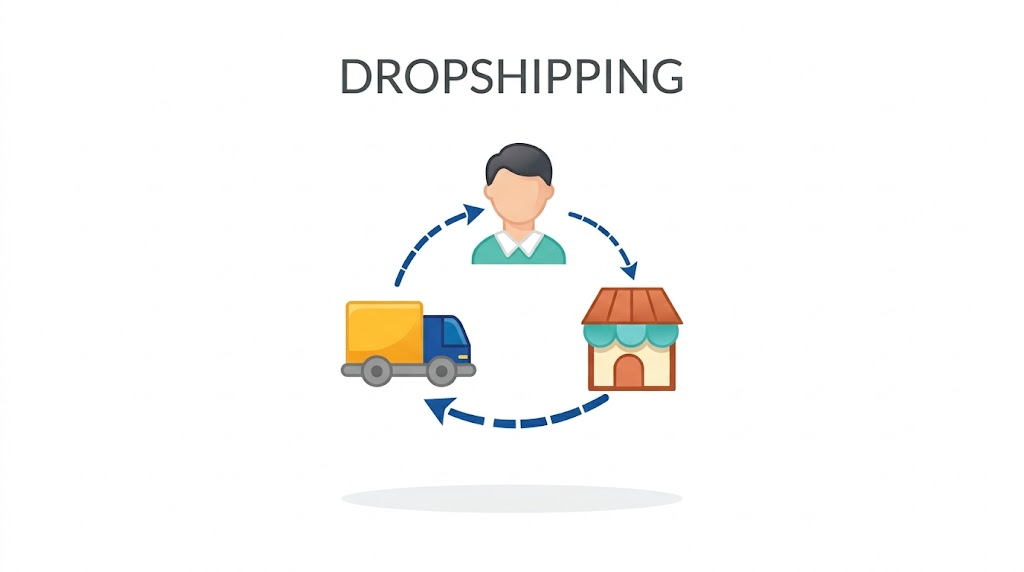
Dropshipping is a retail fulfillment method where e-commerce businesses sell products without maintaining inventory. Instead, when a business receives an order, they purchase the goods from a third-party supplier.
2. The dropshipping market in 2026? Is it really effective?
But we still need concrete evidence – is dropshipping still effective, even in the current climate?
With rising inflation and the risk of economic recession, store owners have every reason to worry. Starting a dropshipping business is a big decision, so double-check your data before selling products.
So, is dropshipping still profitable? Let's examine the current dropshipping business landscape.
In 2024, the dropshipping market was valued at an impressive $366 billion. But what about 2025? Even in the face of inflation and global economic fluctuations, the industry is projected to reach $594 billion by 2028.
Another report from Grand View Research presents similar figures and indicates that dropshipping will continue to grow steadily at 22% until 2030.
This means that by 2030, the global dropshipping market will reach $1.25 trillion worldwide!
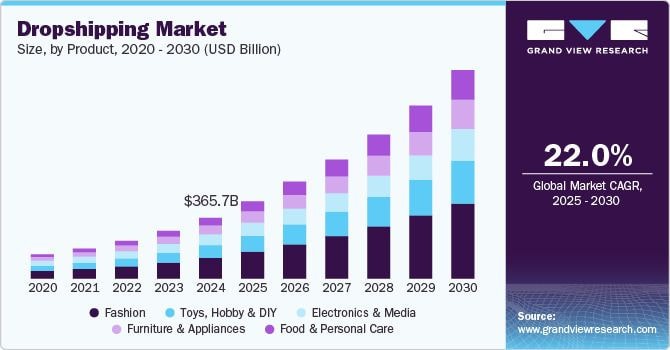
As you can see, the dropshipping market is poised to experience phenomenal growth. This is partly driven by the application of artificial intelligence (AI) in dropshipping, which helps optimize operations. AI is making it easier for businesses to manage inventory, optimize pricing, and enhance customer experience.
On a broader scale, the e-commerce world has boomed over the past several years, with the value of e-commerce transactions projected to reach $7.5 trillion this year and an astonishing $12.9 trillion by 2027.
But it's not just market growth; there's also continued interest from online users in this topic.
Let's look at some data from Google Trends:
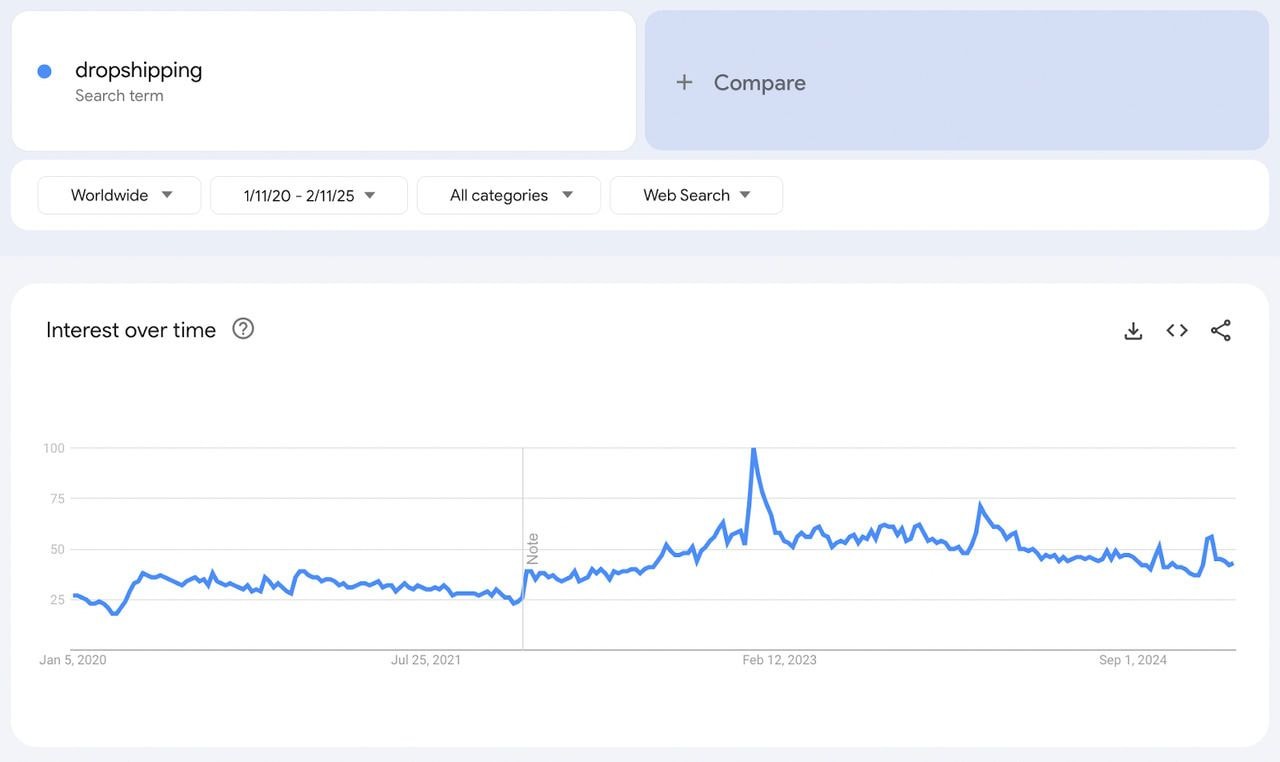
As you can see, the overall trend for the keyword “dropshipping” is relatively stable, with some occasional spikes in interest over time. Consumers are constantly searching for this term, most likely to learn more about it.
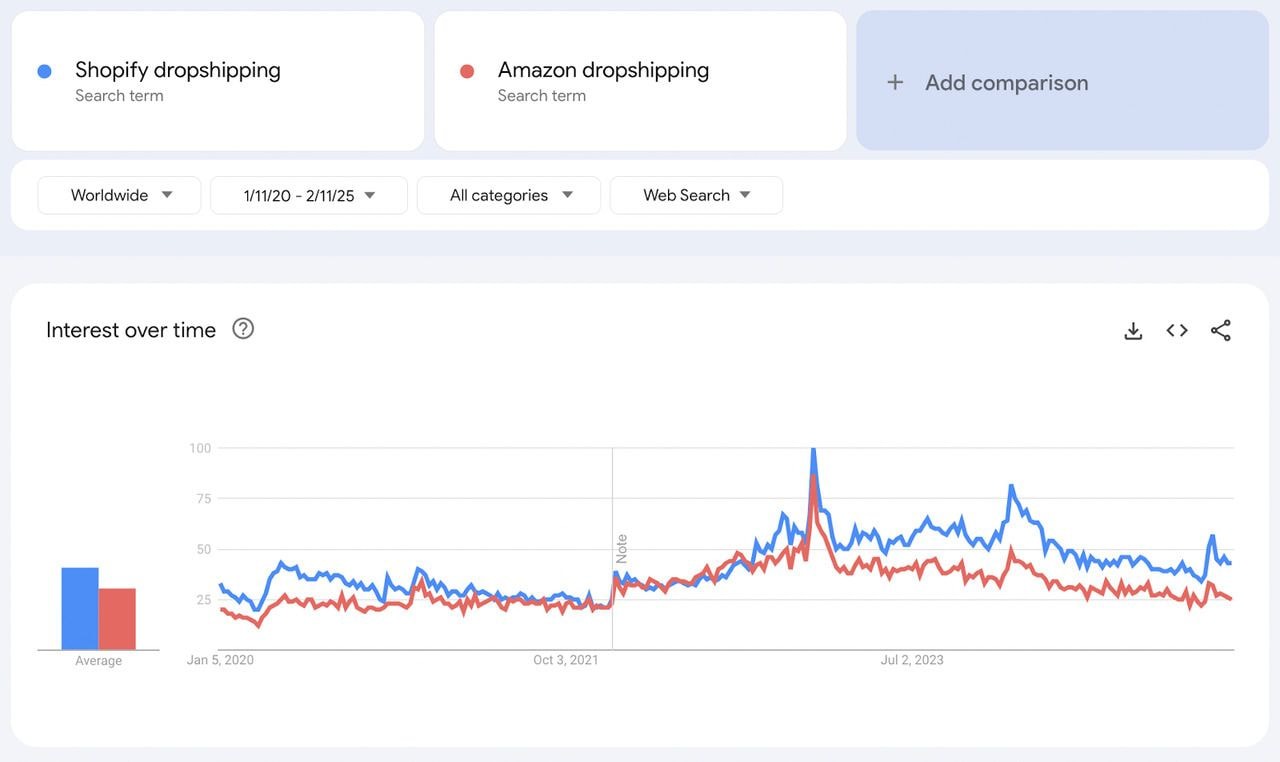
This is also true for related phrases like “dropshipping on Shopify” or “dropshipping on Amazon.” This makes perfect sense, because 62% of Amazon’s sales come from third-party vendors using models like dropshipping. Similarly, the Shopify platform has become incredibly popular with retailers using the dropshipping business model.
All of this means the dropshipping market is still growing, and the term continues to attract a lot of attention from online consumers. Clearly, starting a dropshipping business in 2026 is still very viable.
You can learn more about 30+ e-commerce business ideas to start in 2026.
3. Advantages of Dropshipping
Understanding the value that the dropshipping model brings will help you shape the right business strategy.
3.1 No need for warehouse management or initial investment costs.
Inventory management can be a major challenge for traditional retail businesses, requiring storage space, organized processes, and continuous inventory tracking. With dropshipping, the supplier handles all of this for you, so you never have to worry about running out of stock or having excessive inventory.
Furthermore, you don't need to invest in inventory before selling. Instead, you only pay for the product when a customer places an order, minimizing financial risk and making it easier to start an online business. This makes dropshipping an attractive option for beginners who want to experiment with different product ideas without committing to bulk purchases.
Because you don't have to purchase inventory in advance, you can change products or keep up with trends at any time without worrying about financial losses, helping you maintain a competitive advantage in a rapidly changing market. Even if a product doesn't sell as well as expected, you won't lose money on unsold inventory.
3.2 Low operating costs
Because the supplier handles warehousing, packaging, and shipping, you'll save significantly on logistics costs. Without a physical store or dedicated order fulfillment team, your fixed costs remain low, allowing for higher profit margins.
The only major expenses you need to cover are typically related to marketing, website maintenance, and customer support, making dropshipping one of the most cost-effective ways to run an e-commerce business.
3.3 Flexibility in e-commerce integration
Most dropshipping providers integrate with major e-commerce platforms like Shopify, WooCommerce, and BigCommerce, making order management and process automation easier. Choosing the right provider will ensure a smooth setup and trouble-free operation. With built-in tools for updating prices and processing orders, you can streamline your business and focus on increasing sales instead of dealing with the technical aspects of inventory management.
3.4 No need to be involved in the production, packaging, and delivery process.
The best thing about dropshipping is that your dropshipping supplier handles everything after receiving the customer's order. Production, packaging, and even shipping are their responsibility.
With the burden of logistics removed, you can dedicate more time to the creative aspects of your business. Whether it's perfecting your brand identity, experimenting with new marketing strategies, or optimizing your store design, dropshipping allows you to focus entirely on growth and customer engagement.
4. Disadvantages of Dropshipping
Despite the many benefits this business model offers, there are still some drawbacks.
4.1 The market is highly competitive.
Most people think dropshipping is an easy way to make quick money. However, it's not all rosy; you need to put in real effort and work hard to delve into it. Otherwise, it's difficult to succeed and stand out from the competition. Or you'll just waste your valuable time without achieving results or profitability.
4.2 Difficulties in finding a niche market
A common concern is whether all the best dropshipping segments have become saturated. With so many online retailers, it seems like every profitable segment has already been taken.
But don't worry, because new segments emerge every day due to changing trends and demands. In the online world, anything can create a new trend on social media—a TikTok video, or an influencer talking about something interesting.
There are many tools to help you stay up-to-date, such as Trend Watching, Trend Hunter, Cool Material, and of course, Google Trends. You can also use Google Alerts for specific keywords, such as brand names or product names, to always be aware of the latest news in your field.
4.3 Challenges in product selection and quality control
This will happen if your store has connections with multiple different dropshipping suppliers. Just imagine, if a customer orders many different products, and for each product, there's a different dropshipping supplier, you can't combine these products into one order like other regular retail stores. This also means you'll end up paying shipping fees multiple times.
Furthermore, if the product quality is not good enough when it reaches the customer, you will receive complaints about poor quality. Therefore, preparing a contingency plan and choosing a suitable product supplier is very important. You need to offer a variety of quality products that consumers love. Make sure you receive samples and allow customers to try different products before accepting orders.
Focus on customer satisfaction rather than just sales. This will build long-term relationships and create a reputable brand.
4.4 The Complexity of Customer Support
Sometimes, business owners who rely on dropshipping from third-party suppliers often overlook customer service. Because you don't directly manage inventory or shipping, resolving customer issues can be more difficult, potentially taking longer to pinpoint the cause of the problem or who is responsible. However, the dropshipping business model is no different from traditional retail: ensuring customer care is essential to your business's success.
You must inform customers about any delivery delays, inventory changes, or new product launches, and always respond to inquiries or complaints as quickly as possible. Good customer support shows that you care about your customers and that your store is trustworthy.
5. How much profit can dropshipping generate?
According to Zippia, the average profit margin for dropshipping typically ranges from 20% to 30%. In contrast, the average profit margin for retail delivery services is only 3% to 10%, suggesting that dropshipping can offer significantly higher profit margins than other forms of commerce.
Of course, this is just an average. Potential profits from dropshipping will vary greatly depending on many factors, including the type of products you are selling, your marketing strategy, and the scale of your business. Even within the same industry, there will be fluctuations based on the specific characteristics of each product.
Based on recent data, the top product categories with high profit potential include:
- Fashion and Apparel : As one of the fastest-growing sectors, fashion and apparel boasts gross profit margins ranging from 30% to 50%, according to Fabric. The global apparel market is projected to reach $2.26 trillion by 2030, growing at a compound annual growth rate of 4.2% from 2026 to 2030.
- Electronics : According to Fabric, this category, particularly important in North America, has an estimated gross profit margin of around 20%. Ecommerce Platforms reports that electronics account for approximately 30% of the dropshipping market in North America.
- Home & Garden : This sector, encompassing home decor and furniture, had a market value of $29.9 billion in 2022 and is projected to grow at a CAGR of 12.3% through 2028, according to Dropshipping.com. According to Fabric's data, gross profit margins in this category can be estimated at 50% to 60% for home decor and lighting, and approximately 45% to 50% for furniture.
- Toys and children's products : Falling under the broader category of toys, hobby items, and DIY products, this segment can achieve gross profit margins of 40% to 50%, according to Fabric. Ecommerce Platforms notes that these segments are generating significant revenue from online shoppers in multiple regions, including the US, Canada, Japan, China, and Europe.
- Print-on-demand : A growing segment in dropshipping, the global print-on-demand market is projected to reach approximately $39.21 billion by 2030. While there's no specific data on profit margins, the increasing market value suggests promising profit potential. Learn how to start a print-on-demand business and print-on-demand companies for more details.
- Food and personal care products : Projected to grow at a CAGR of 5.8% from 2026 to 2032, this market is becoming increasingly lucrative—especially in the areas of perfumes, cosmetics, and skincare products.
6. Which dropshipping model is right for your business?
6.1. Dropshipping low-priced products
This model involves selling inexpensive products (like socks or mugs) in bulk. The idea is to make a small profit on large sales volumes. The higher the average monthly sales, the greater the profit potential of the dropshipping model.
- Profitability : Profit margins per product are relatively low, and many dropshipping sellers in this field earn less than $500 per month. However, with effective marketing strategies and high sales volume, profitability can increase.
- Strategy : Success in the low-cost product dropshipping model often depends on effective digital marketing strategies to attract as much traffic and sales as possible. Consider using Facebook Ads, Google Ads, and Instagram Ads—all of which can be created and managed from your Wix dashboard—to reach more people immediately.
6.2 Dropshipping high-priced products
The premium dropshipping model focuses on selling fewer products but at a higher price point, such as furniture or luxury goods. Premium items typically have an average price of $200 or more. These items usually have a higher perceived value and require a more targeted marketing approach. With this model, you can focus your efforts on marketing a small number of products each month instead of hundreds or thousands of low-priced items.
- Profitability : This model can lead to higher profits, potentially ranging from $1,000 to $10,000 per month, depending on factors such as product selection, marketing, and customer service.
- Strategy : High-value items typically require more detailed product descriptions, higher-quality customer service, and a more tailored marketing strategy. Look for products that focus on utility and/or target a specific segment, such as sports, hobbies, or outdoor equipment.
6.3 Private Label Dropshipping
In the private label dropshipping model, you sell third-party manufactured products under your own brand. This model allows you to better control and differentiate your brand, helping you build brand recognition.
- Profitability: Although initial costs may be higher due to branding and product customization, private label dropshipping can yield higher profit margins thanks to customer loyalty to the brand and unique products.
- Strategy : This approach requires a focus on brand building, product quality, and customer loyalty. Your marketing efforts should emphasize your brand story, mission, and core values.
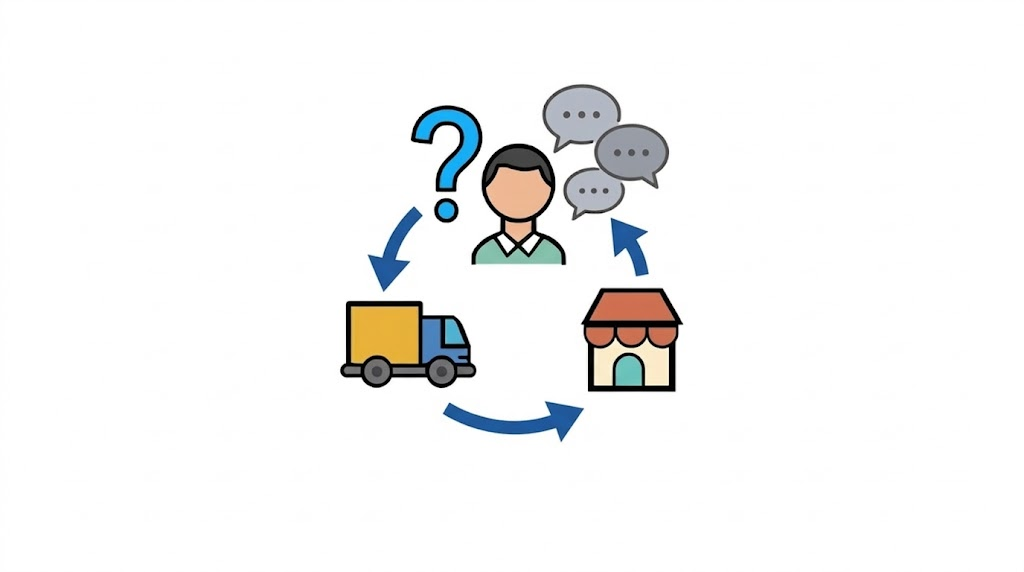
7. Things to know when starting a dropshipping business
To ensure success when starting a dropshipping business, it's crucial to build a solid foundation for the entire operation. In other words, make sure you:
7.1 Market Research
The most important part of setting up a dropshipping store is market research. You've chosen a dropshipping niche, and now you need to see what your competitors are doing.
What types of products do they sell? Where does their product catalog originate from? What e-commerce platform do they use? Which keywords are most effective and which products sell best on their website? What marketing strategy do they employ?
Take note of all these points and apply the best solutions to your business.
You can read more here: How to Start Dropshipping in 2026 : A Beginner's Guide
7.2 Finding the best dropshipping supplier
As you might expect, there are many suppliers, and each operates differently. Research dropshipping suppliers in your industry and learn about their integrations and store setup processes.
Don't forget about their product quality control, shipping costs, and customer support services. The key to success is ensuring your chosen supplier meets all your needs.
7.3 Choosing the right e-commerce platform
Choosing the right platform is crucial to ensuring your store's success. You need to select a platform that suits your business, has user-friendly software, and helps your brand stand out.
While many dropshippers open their own online stores, another option is to sell through e-commerce platforms. Platforms like eBay, Etsy, and Amazon allow you to reach an existing customer base, which can help you start selling sooner. However, e-commerce platforms also have their own regulations, fees, and competition, so it's important to weigh the pros and cons before deciding on your selling method.
See more:
-
How to create a seller account on eBay - A detailed guide
-
30 Types of Digital Products to Sell on Etsy
If you plan to open your own store, take the time to choose the platform that best suits your needs. Platforms like Shopify, WooCommerce, and BigCommerce offer different features, pricing structures, and customization options. Some offer built-in marketing tools, while others require additional plugins for essential functionalities.
You can find more information here:
-
How can I manage multiple Shopify stores without getting banned?
-
How to effectively manage a multi-store WooCommerce system?
-
How to manage multiple BigCommerce stores without risk?
Remember to check if your dropshipping provider integrates directly with your chosen platform. Automating the order process can help you run your store more smoothly.
7.4 Marketing
Marketing is how people learn about your business. You might have the best online store, but without an effective marketing strategy, no new customers will reach it.
Remember that marketing is an ongoing effort requiring strategy, experimentation, and adaptation. From building brand awareness to converting visitors into buyers, every step in the customer journey depends on effective marketing strategies. Your goal is to get your product to the right audience through organic content, paid advertising, or influencer partnerships. Understanding your target market and crafting compelling messaging will help you stand out from the competition.
5. Get acquainted with SEO
SEO stands for Search Engine Optimization and is the process of improving your website's visibility on search engines like Google or Bing when people search for products and services related to your business. Your website will appear higher in search results if you use specific keywords that people are typing into the search engine. SEO is one of the most powerful tools to help you reach new customers who are unfamiliar with your brand.
8. Conclusion
With e-commerce platforms and advertising platforms like Facebook, TikTok, and Google increasingly tightening verification processes, owning a professional operational infrastructure has become crucial for the survival of any dropshipping business. Instead of using unsafe tactics, successful businesses are now moving towards a centralized multi-channel management model using the Antidetect Browser Hidemyacc to sustainably protect their account systems. This solution helps ensure security and increase profitability for dropshipping businesses.
Download Hidemyacc for a 7-day free trial.
9. FAQ
9.1 Is dropshipping really effective?
The dropshipping business model may be viable, but it doesn't guarantee success. Dropshipping is suitable for online entrepreneurs with experience in online sales and marketing, who are willing to invest time and money in niche market research and a solid business plan.
9.2 Is the dropshipping business model profitable?
Yes, dropshipping can be profitable, but its success and profitability depend heavily on many factors. It also requires creative thinking and differentiating your brand through marketing, pricing, and a positive customer experience.
9.3 Is dropshipping legal?
Dropshipping is a legitimate business model. Like any other business model, you need to do thorough research, partner with reputable suppliers, and comply with all legal regulations.
9.4 Can I combine dropshipping with a business I already own?
Absolutely. Many business owners choose the dropshipping model for a portion of their inventory. It's a great idea for products that require special handling, such as expensive goods, large or heavy items, fragile items, etc.
9.5 Is offering discounts for bulk purchases a good idea?
It depends, because while discounts are generally a way to attract customers, they should be offered on products that still generate profit even at a lower price. You should consider the profit margins of different products within your business and focus on including a few high-profit margin products.
9.6 Can you suggest some dropshipping products?
If you're just starting out in dropshipping but don't know what to sell—unique t-shirts, quirky coffee mugs, motivational bookmarks, watches, or inexpensive jewelry, etc.—then this is the place for you.
9.7 How important is product photography if I don't have inventory?
Product photography is incredibly important and one of the most powerful conversion drivers, especially when many dropshipping sellers are selling the same or similar items. Many sellers require samples, use mockups, or commission branded product photography.
9.8 Is dropshipping allowed on Amazon and eBay?
Yes. Both platforms allow dropshipping as long as you comply with their regulations, remain an official seller, and use approved suppliers.